By Zablon Oyugi, May 7, 2026, Consultative Group on International Agricultural Research (CGIAR) has launched a new initiative to transform crop breeding and accelerate the development of high-impact, farmer-ready varieties across Africa, Asia, and Latin America.
This follows a grant from the Gates Foundation to design and develop varieties for 12 priority crops –the next generation of high-impact, in-demand crop varieties that will break through persistent barriers to adoption.
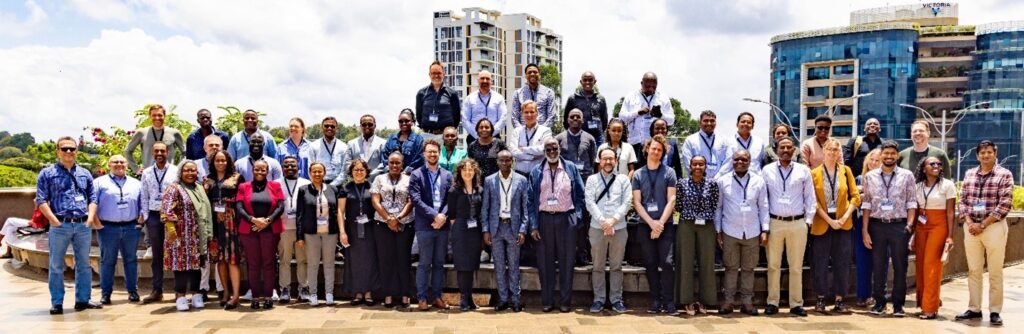
The initiative was formally launched at the Breakthrough Product Network meeting in March 2026 in Nairobi, bringing together breeding teams from the International Maize and Wheat Improvement Center (CIMMYT), the Alliance of Bioversity International and CIAT, the International Rice Research Institute (IRRI), the International Institute of Tropical Agriculture (IITA) and the International Potato Center (CIP), alongside representatives from the Gates Foundation.
At the meeting, scientists and partners outlined a shared ambition to develop crop varieties that deliver 25–30% improvement in productivity and value compared to the cultivars they replace, while responding more closely to farmer and market needs.
Achieving this goal, they noted, will require stronger use of market intelligence in breeding decisions, improved accuracy in breeding pipelines, greater integration of digital tools and shared services, and closer coordination with national research institutions.
A key innovation under the grant is the Crop Concept approach, implemented by CIMMYT, the Alliance of Bioversity International and CIAT, and Ghent University. The approach introduces “concept testing” as a structured way to identify unmet market needs and translate them into product ideas that guide breeding investments.
The process begins by identifying demand shaped by farmer challenges, consumer preferences, nutrition priorities, and market trends. From these insights, teams develop early product concepts, which are then tested with farmers and stakeholders before significant breeding resources are committed.
Researchers use tools such as short explainer videos and artificial intelligence-driven speech recognition to capture farmer feedback on preferred traits.
Concepts with strong potential are refined into Target Product Profiles (TPPs), which define the ideal variety for specific market segments.
Speaking at the meeting, CIMMYT Market Research Specialist Pieter Rutsaert said the approach has already shown success in maize, groundnut, and sorghum projects in Uganda, Kenya, and Tanzania.
“By grounding variety design in market insights and farmer needs, breeding programs can focus their resources on varieties that are more likely to be adopted,” he said.
Beyond product design, the initiative also focuses on strengthening breeding pipelines. A second workstream launched in Nairobi will provide technical support to improve breeding efficiency through program optimization, shared services, and enhanced collaboration with national research systems.
Dorcus Gemenet, Quantitative Genetics Team Lead in CGIAR’s Breeding for Tomorrow program, emphasized the importance of data-driven decision-making. “Breeding programs have committed to ambitious targets, with breakthrough products expected to deliver 15–30% more genetic gain than current varieties,” said Gemenet.
“This makes it even more important to optimize breeding pipelines. This is why our program is working with a suite of very engaged crop teams and breeding leads to design more efficient systems.”
The initiative will also leverage shared infrastructure, including genotyping platforms, integrated data systems, and drone-based phenotyping tools. These shared services are expected to improve efficiency, reduce costs, and enhance data quality across programs.
Finally, the grant strengthens collaboration with national agricultural research and extension systems to ensure new varieties reach farmers effectively. This includes joint testing, capacity building, and on-farm verification trials.
The Breakthrough Product Network covers maize, rice, wheat, dryland crops, beans, cassava, yam, cowpea, potato, sweet potato and banana, marking one of CGIAR’s most coordinated efforts to redesign crop breeding around farmer demand and market impact.