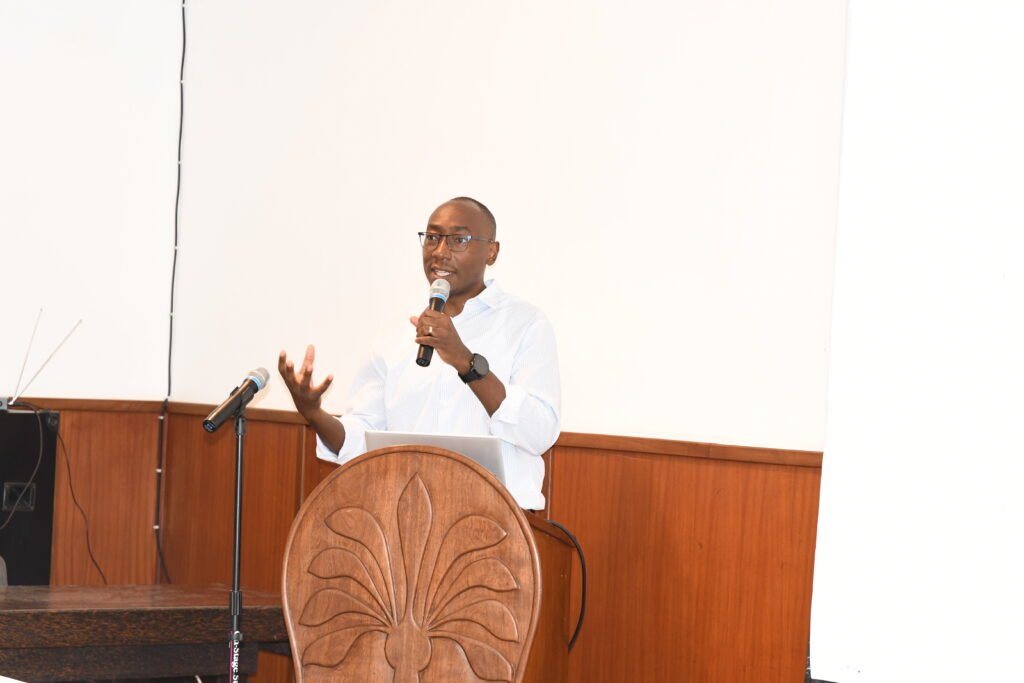
Prof. Ambrose Agweyu, a paediatrician and clinical epidemiologist and the lead scientist of the TRACE program. Photo Credit: KEMRI
By Murimi Gitari, May 04, 2025, The Kenya Medical Research Institute (KEMRI)-Wellcome Trust Research Programme and London School of Hygiene and Tropical Medicine have launched a program — Tackling the Risks of Aflatoxins and Climate Effects on Child Health in Africa (TRACE) an initiative aimed at reducing child mortality by confronting the hidden dangers of aflatoxin contamination in staple foods.
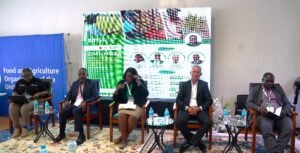
Launched in Kilifi, due to the KEMRI-Wellcome Trust’s long-standing health surveillance system and globally recognized research infrastructure, TRACE marks a decisive step in safeguarding Africa’s future generations. By investigating how climate change worsens aflatoxin contamination and its impact on child health in Kenya and The Gambia, the program seeks to generate evidence that can inform both local and continental policies.
With its multidisciplinary approach blending climate science, epidemiology, immunology, and community research, TRACE aims to reduce child mortality by curbing the effects of aflatoxins on nutrition and vaccine effectiveness, ensuring that children across Africa have a healthier, more resilient start in life.
These toxic chemicals, aflatoxins, produced by fungi and worsened by climate change, are not only linked to liver cancer but also undermine child nutrition and weaken immune responses to vaccines, leaving millions of children across Africa vulnerable to preventable illness and death.
Speaking during the launch of the program, Prof. Ambrose Agweyu, a paediatrician and clinical epidemiologist and the lead scientist of the program noted that aflatoxin contamination has become a pressing public health issue in Kenya and across Africa, particularly in the context of climate change. He explained that smallholder farmers often dry their grain in the sun, leaving it vulnerable to erratic weather patterns that provide ideal conditions for the fungi that produce aflatoxins to thrive.
“Prolonged droughts and heavy rainfall both create conditions that favour the growth of fungi such as Aspergillus flavus, which produces aflatoxins. In the past, when weather patterns were more predictable, farmers could dry their grain more reliably. Today, however, unpredictable climatic shifts have made complete drying difficult, leading to higher risks of contamination,” he explained.
He noted that research under the TRACE project is examining how climate variability over the past two decades has influenced aflatoxin exposure in children. Archived blood samples from long-term studies in Kilifi and in Gambia provide an opportunity to track toxin levels against climate data, generating robust evidence of the link between environmental change and child health. Chronic exposure, he explained, not only causes acute poisoning and liver cancer but also undermines nutrition, weakens immunity, and reduces the effectiveness of vaccines.
“One of the biggest challenges has been the siloed approach of government ministries. The Ministry of Health, the Ministry of Agriculture, and the Ministry of Environment each recognize the problem but often act independently. TRACE seeks to break down these silos by bringing stakeholders together, national and county governments, researchers, and the media included to align strategies and speak with one voice. He underscored the importance of consistent messaging, noting, “farmers in Kilifi, and other regions rely heavily on clear communication to adopt safer practices.”
Looking ahead, he explained that the project’s success depends on ensuring that findings are translated into practical solutions for the millions of families who rely on grain as their staple food. This includes improved drying and storage methods, biocontrol products such as Aflasafe, and awareness campaigns. He highlighted the role of the media as a critical partner in carrying evidence-based messages to communities, ensuring that farmers receive guidance that is both consistent and actionable. For Prof. Agweyu, this meeting marked an important first step in building the partnerships needed to protect child health in the face of climate change
Dr Julliet Omwoha, Head of Newborn and Child Health, Ministry of Health in Kenya also noted that for too long we have engaged with aflatoxin primarily as a food safety and trade matter – something regulated in the agricultural sector.
“I want to be direct in recognising aflatoxin is a child health emergency, and its effects on our youngest Kenyans begin in the womb. When a pregnant mother consumes contaminated maize aflatoxin crosses the placental barrier and reaches the developing foetus and it does not stop at birth: aflatoxin metabolites are detectable in breast milk, meaning that even a breastfeeding infant whose mother has no other recourse than locally stored grain continues to receive a daily dose of this mycotoxin during the most critical window of immune and neurological development. This is a sobering reality that demands we move our response well upstream of the clinic, upstream of the health facility, and upstream of the postnatal visit,” she explained.
Dr Omwoha also added that chronic aflatoxin exposure in young children causes stunting. It suppresses the immune system. It undermines the very vaccines that our health system delivers with such effort and investment, rendering them less effective in the children who need them most.
Prof. Agweyu highlighted one of the most promising innovations in combating aflatoxin contamination: Aflasafe, a biocontrol product developed through collaborative research in Kenya and beyond. He explained that Aflasafe works by introducing a harmless strain of fungus into farmers’ fields. This strain does not produce toxins and effectively outcompetes the dangerous Aspergillus flavus fungus that does. By displacing the toxin-producing fungus, Aflasafe protects grain from contamination and reduces aflatoxin levels in both soil and harvests.
While studies have already demonstrated Aflasafe’s effectiveness in lowering contamination, Prof. Agweyu noted that the critical gap lies in understanding its direct health impacts. TRACE aims to bridge this gap by investigating whether reduced aflatoxin exposure translates into measurable improvements in child health – such as stronger immunity, fewer respiratory infections, and lower rates of diarrhea.
He reminded the audience that Kenya has experienced deadly aflatoxicosis outbreaks, particularly in the eastern regions, where contaminated maize has caused acute liver failure and even death. Yet, he cautioned, the true burden of aflatoxin goes far beyond these headline-grabbing crises. Emerging evidence shows that chronic exposure affects children’s immunity, contributes to stillbirths and premature deliveries, and may even impair learning and school performance. Children heavily exposed to aflatoxins risk failing to reach their full academic potential, which in turn undermines their economic prospects and perpetuates a cycle of poverty across generations.
Prof. Agweyu concluded by stressing that breaking this cycle requires more than scientific innovation, it demands coordinated action. By combining biocontrol solutions like Aflasafe with strong policy alignment, farmer education, and media engagement, TRACE hopes to ensure that scientific findings translate into healthier children, safer food systems, and more resilient communities.
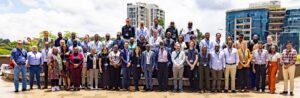
TRACE is a multi-institutional collaboration involving the KEMRI-Wellcome Trust Research Programme, London School of Hygiene & Tropical Medicine, the MRC Unit The Gambia at LSHTM, the University of Nairobi, the Kenya Paediatric Research Consortium (Keprecon), Rootooba, the University of Georgia, and the University of Oxford, funded by the Wellcome Trust.