By zablon Oyugi, February 24, 2026: A global study has revealed that three of the world’s most essential food staples—rice, maize (corn), and cassava—collectively account for about 11% of total global deforestation, a footprint larger than that of better-known forest-risk commodities like cocoa, coffee, and rubber.
The findings, published on 23 February 2026 in Nature Food, come from the one of the most comprehensive assessment to date of how agricultural commodities drive forest loss and carbon emissions worldwide.
The research, led by Chandrakant Singh and Martin Persson using a new model called the Deforestation Driver and Carbon Emissions (DeDuCE) framework, integrates satellite tree-cover loss data with spatial and statistical agricultural information across 179 countries and 184 commodities from 2001 to 2022.
This holistic approach allowed the team to attribute forest loss not just to high-profile crops, but to a broad suite of food products whose deforestation impacts have historically been underestimated or poorly quantified.
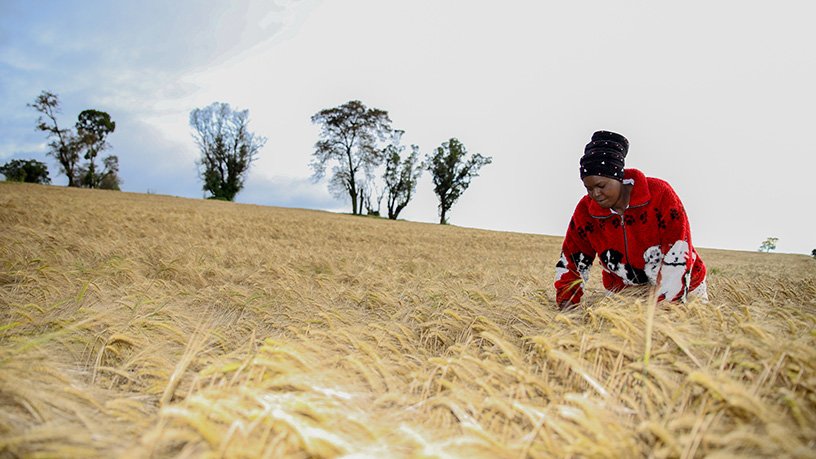
According to the analysis, the expansion of agricultural land for staple crops such as rice, maize, and cassava is responsible for a significant share of forest conversion globally.
“In total, 121 million hectares of forest—the equivalent of roughly the size of South Africa—were cleared during the 21-year period for croplands, pastures, and forest plantations, leading to an estimated 41.2 gigatonnes of carbon dioxide emissions from associated land-use change,” stated the study in part.
While cattle ranching, oil palm, and soybean production remain dominant drivers of tropical deforestation in regions like the Amazon and Southeast Asia, the Nature Food study shows that staple crops have a more geographically dispersed impact.
“Unlike commodities concentrated in specific regions, staple crop-linked deforestation occurs across many countries and agricultural systems, reflecting the global role these foods play in feeding growing populations,” it stated.
The fact that rice, maize, and cassava together have a greater deforestation footprint than cocoa, coffee, and rubber challenges prevailing assumptions about which agricultural commodities are most damaging to forests. Cocoa and coffee, while high-risk for specific countries or landscapes, contribute less to the global tally than the combined effect of staple food expansion.
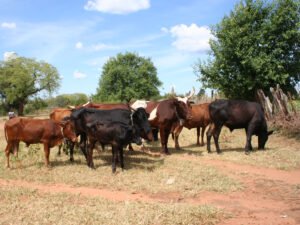
Pasture expansion—driven by livestock grazing—was the largest single driver of deforestation during the same period, accounting for about 42% of forest cover loss and 52% of related carbon emissions underscoring the continuing importance of addressing meat and animal feed systems in forest protection strategies.
Researchers argue that the findings suggest a need to broaden global deforestation monitoring and policy frameworks to include staple crops alongside the traditional focus on commodities like palm oil and soy.
Given that nearly half of the average global diet is made up of staple commodities and that demand for these foods is expected to rise with population growth, incorporating staples into sustainability standards and land-use planning could be a critical step toward curbing agricultural deforestation in the coming decades.
The authors also highlight data limitations—particularly for African nations where spatial agricultural data are less robust—which suggest that even the current estimates might be conservative and that improved monitoring could reveal an even higher deforestation footprint for staple crops