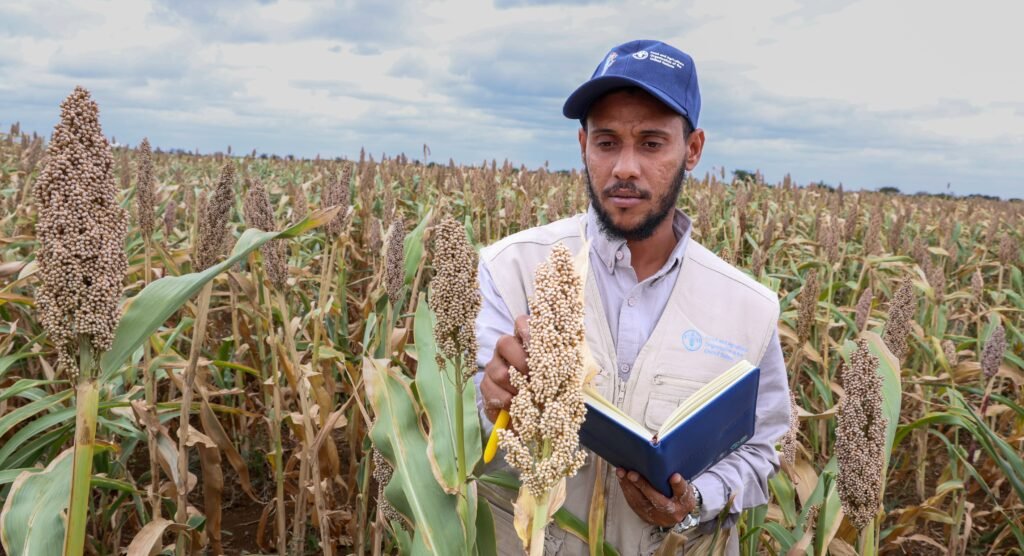
Seed multiplication in Baidoa, Somalia under the project Strengthening Emergency Preparedness and Response to Food Crisis (SEPAREF), implemented by FAO with funding from the African Development Bank. Photo Credit: FAO/Abdillahi Hassan Jama
By Panagrimedia Correspondent, March 13, 2026, A regional initiative to strengthen seed systems and crisis preparedness across fragile contexts in Burundi, Comoros, Somalia and South Sudan has delivered significant gains in food security resilience. The project, titled Strengthening Emergency Preparedness and Response to Food Crisis (SEPAREF), was implemented by the Food and Agriculture Organization of the United Nations with funding from the African Development Bank (AfDB) and in partnership with government ministries of the four countries.
Designed in response to food security vulnerabilities exacerbated by global supply disruptions linked to the Russia–Ukraine War, the initiative focused on strengthening seed system foundations, improving input markets and advancing digital early warning platforms to contribute to increased local production. The project’s promising outcomes underscore the need to build on these initial results through a second phase of investment to ensure long-term sustainability and enable effective scaling.
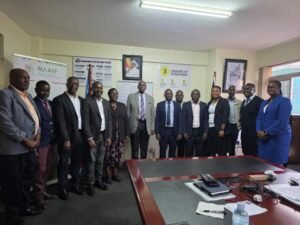
Regional validation workshop
To consolidate achievements and chart the way forward, a regional validation workshop was held from 4 to 6 March 2026 in Nairobi, Kenya.
The meeting brought together technical teams from FAO, AfDB, National Agricultural Research Systems (NARS), ministries of agriculture and finance from the participating countries, and representatives from the private sector. Participants assessed project results and explored ways to embed the advances made in seed systems and digital early warning tools into permanent national infrastructure.
Strengthening seed systems and resilience
Participants acknowledged several key results achieved under the project. More than 956 tonnes of Early Generation Seed (EGS), valued at USD 1.7 million, were produced, improving access to climate-and drought-tolerant crop varieties. The project also rehabilitated irrigation and seed storage facilities and supported over 250 seed out-growers, strengthening local production capacity. In partnership with the International Institute of Tropical Agriculture (IITA)/Technologies for African Agriculture Transformation (TAAT), the project enhanced national research institutions’ capacity to ensure the highest standards of seed technologies reach smallholder farmers.
Institutionally, the initiative helped establish national seed councils and digital early warning systems, along with coordination mechanisms to support crisis preparedness. These digital platforms have already registered more than 160 000 farmers, improving access to early warning information and agricultural advisory services.
Building on the gains
During the workshop, Pascal Sanginga, Regional Manager for Agriculture and Agro-Industries at the African Development Bank, called for scaling up the initiative for “better food and nutrition security, job creation, and the critical reduction of grain import bills”.
“Despite these successes, significant risks remain,” he said, citing limited government budgets, donor dependency and restricted access to capital for seed enterprises. “This gathering should serve as a strategic design lab, transforming three years of lessons into a structured roadmap for a multi-country seed security and resilience programme.”
The success of the workshop and the project’s technical implementation was supported by the FAO Regional Office for Africa (RAF) Resilience Team including the RAF Senior Regional Resilience Officer, Priya Gujadhur, alongside the FAO Sub-regional Office for Eastern Africa (SFE) Agriculture Officer, Orlando Sosa.
Speaking at the workshop, Farayi Zimudzi, FAO Representative in Kenya, emphasized the importance of sustaining the project’s gains even as it concludes.
“Financial sustainability for the seed sector is critical,” she said. “But equally important is embedding seed certification systems and digital early warning tools into national structures, with harmonized standards and stronger public–private partnerships to scale seed enterprises.”
The workshop concluded with firm commitments by all stakeholders to sustain the gains achieved and support the development of a multi-country follow-on programme aimed at transforming the project’s achievements into regional public goods and scaling up seed security and resilience efforts across participating countries.