
By Murimi Gitari, October 29, 2026, Kenya’s coffee harvest is recovering from a long decline and can triple within three years, Coffee Board of Kenya Chairman Henry Kinyua said on Wednesday, as the Government sets its sights on 150,000 metric tonnes by 2028.
Speaking at the opening of the East Africa Coffee Markets and Conference in Nairobi, the coffee board chair said production this season is about 60,000 tonnes, nearly double the roughly 34,000 tonnes recorded in 2020/21, the lowest in recent years. Output was once far higher, peaking at more than 138,000 tonnes in the 1978 season before sliding for decades.
“Technically, we produce the best coffee in the world. But of late, the volumes have been going down,” he said, adding that the climb since the 2020s has been “very good”.
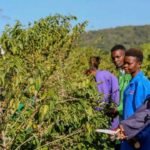
The recovery rests on getting more from trees farmers already own, through rehabilitating ageing bushes, and on planting in counties with no tradition of coffee. Kinyua said Nandi’s output has grown about 560 per cent in a decade, a revival for a county that led the country in the 1990s before farmers abandoned the crop over erratic prices. Government figures show its auction sales up 92 per cent this season, while investors in Narok are planting tens of acres at a time and West Pokot, Baringo, Trans Nzoia, Kakamega and Bungoma are also coming into production, some on land that has never grown coffee.
Kirinyaga won praise for making land leasing easy, which has drawn young people into coffee farming. “Coffee is elevation, soil and management,” he noted, explaining that red volcanic soils at the right altitude do best.
He admitted that Kenya has underinvested in coffee research for two to three decades, leaving scientists at the Coffee Research and Training Institute with varieties, including Arabusta, a cross between Arabica and Robusta, that they lacked the money to release. The Coffee Act 2026 is meant to change that by making the institute a stand-alone agency able to raise its own funds, with about a quarter of the 2 per cent levy going to research. He expects farmers to receive new, climate-resilient varieties within three years.
Kenya Airways Chairman Kiprono Kittony said production could rise without more acreage, provided farmers get water, extension services, cheaper inputs and patient capital, since many cannot wait for a harvest to meet monthly needs. He noted that Kenyan coffee commands premium prices abroad without farmers always seeing a matching return, citing an espresso made from Kirinyaga beans that reportedly sold for US$22 in Taipei, and pointed to Colombia, where shared milling, packaging and storage facilities have strengthened smallholders.
Kenya sells through the Nairobi Coffee Exchange auction and through direct deals between farmers and buyers, which according to the chair pay 35 to 40 per cent more, although the auction remains important for transparent price discovery.
About 95 per cent of Kenya’s coffee is exported, with more than half going to Europe, largely through Germany, a dependence Kinyua said should ease as Kenyans drink more of their own crop and new buyers open up. Italy has begun buying directly after years of receiving Kenyan coffee through Hamburg, he said, and the Middle East and African markets under the continental free trade area are also growing.
Edward Githaiga, representing Foreign Affairs PS Abraham Korir Sing’oei, said the Government is using “coffee diplomacy” to turn Kenya’s embassies into trade desks that find buyers and link growers to roasters and financiers. It is also proposing an “Afro Coffee Village” to bring buyers, roasters and equipment makers to growing areas, and Kenya could serve as a regional trading hub given its links with Uganda, Ethiopia, Tanzania, Rwanda and Burundi.
Kinyua said the value chain offers young people work as roasters, baristas, trainers, nursery operators and exporters, and that the Board will promote new products such as cascara tea, made from dried coffee husks that farmers now discard. The three-day conference, at the Visa Oshwal Centre, ends on Friday under the theme “From Farm to Flavor: Quality, Compliance and Market Growth”.