
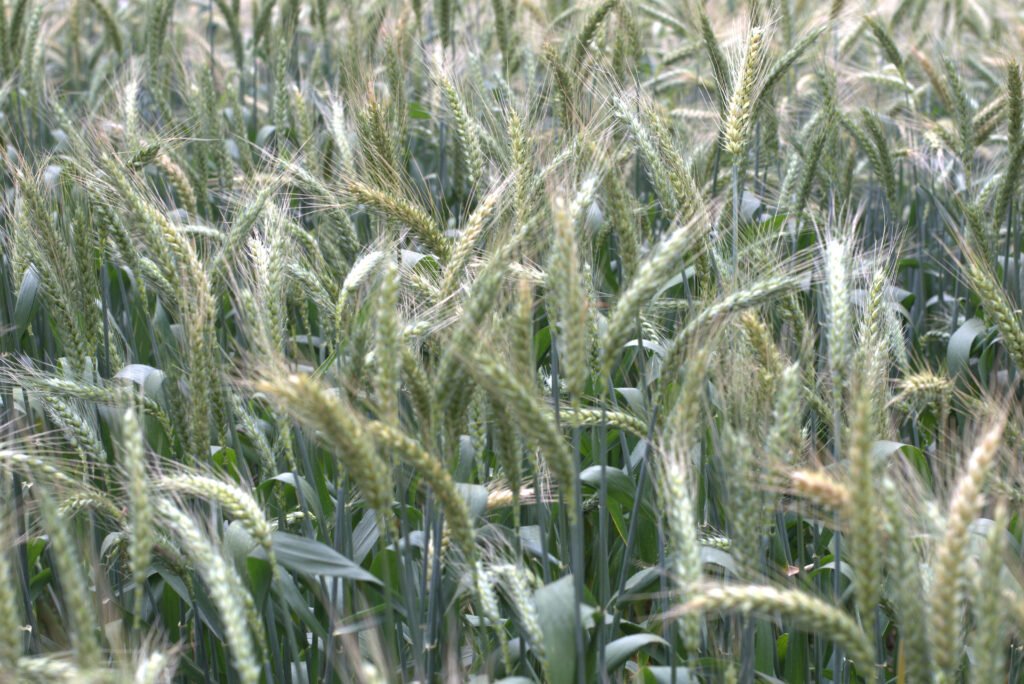
By Zablon Oyugi, April 21, 2026, Smallholder farmers across Africa could soon benefit from new wheat varieties that require less fertilizer, following a strategic partnership aimed at reducing reliance on costly synthetic nitrogen inputs.
The International Maize and Wheat Improvement Center (CIMMYT) has signed a memorandum of understanding with the University of California, Davis under the World Bank Group’s AgriConnect Program to accelerate the development and responsible deployment of nitrogen-related innovations in wheat production.
The agreement comes at a time when fertilizer supply chain disruptions continue to drive up prices and limit access, placing significant strain on smallholder farmers who depend on affordable inputs to sustain yields. Experts say innovations that reduce fertilizer dependence are critical to ensuring food security and improving farm profitability.
In a statement shared on its X platform, CIMMYT said the partnership marks “an important step toward more resilient and sustainable wheat production systems.” The organization also acknowledged Bayer for facilitating the collaboration, noting its role in supporting agricultural innovation for African farmers.
The initiative brings together global expertise from research, development, and financing institutions to scale technologies already undergoing field trials. According to Paschal Donohoe, Managing Director and Chief Knowledge Officer at the World Bank Group, the collaboration builds on innovations developed at UC Davis that are currently being tested in partnership with Bayer.
“We’re using technology that’s been developed at UC Davis. It’s in the fields in trials with Bayer and we’re working with CIMMYT to make this a reality for millions and millions of farmers around the world,” Donohoe said.
Bayer Chief Executive Officer Bill Anderson described the initiative as a potential breakthrough, highlighting the promise of biotechnology in transforming agriculture on the continent.
“While we’re really excited for the opportunity to partner with UC Davis and CIMMYT to bring the miracles of biotechnology to the African continent in the form of wheat that requires less fertilizer, this could be a huge breakthrough for the farmers and for humanity,” he said.
The collaboration is also expected to pave the way for broader applications of the technology across other crops. Ashley Stokes, Dean of the College of Agriculture and Environmental Sciences at UC Davis, emphasized the global potential of the research and its impact on food systems.
“We are so excited about this partnership with CIMMYT, thinking about partnerships with Bayer and how we can really launch this and scale this around the world. It’s an amazing opportunity,” she said, adding that the university is proud to contribute to science that can deliver real-world impact.
World Bank Group Vice President for the Planet, Guangzhe Chen, underscored the importance of leveraging science to tackle Africa’s agricultural challenges, particularly in reducing fertilizer dependency.
“This technology, as we know it, is going to help farmers to reduce the reliance on fertilizers,” Chen said, describing the initiative as potentially “game-changing.”
CGIAR Director General Ismahane Elouafi echoed the sentiment, expressing optimism about the partnership’s long-term impact.
“We are looking forward to a fruitful partnership that will allow us to reduce use of nitrogen in wheat production globally,” she said.
The collaboration signals growing momentum among global institutions to develop climate-smart agricultural solutions that enhance productivity while reducing environmental impact, offering renewed hope for millions of farmers facing rising input costs.