By Zablon Oyugi, November 11, 2026, The Alliance for a Green Revolution in Africa (AGRA) is urging global leaders, development partners and investors to move beyond fragmented climate projects and channel more investment into Africa’s climate-resilient agrifood systems, saying adaptation must deliver higher farmer incomes, stronger food security and economic opportunities.
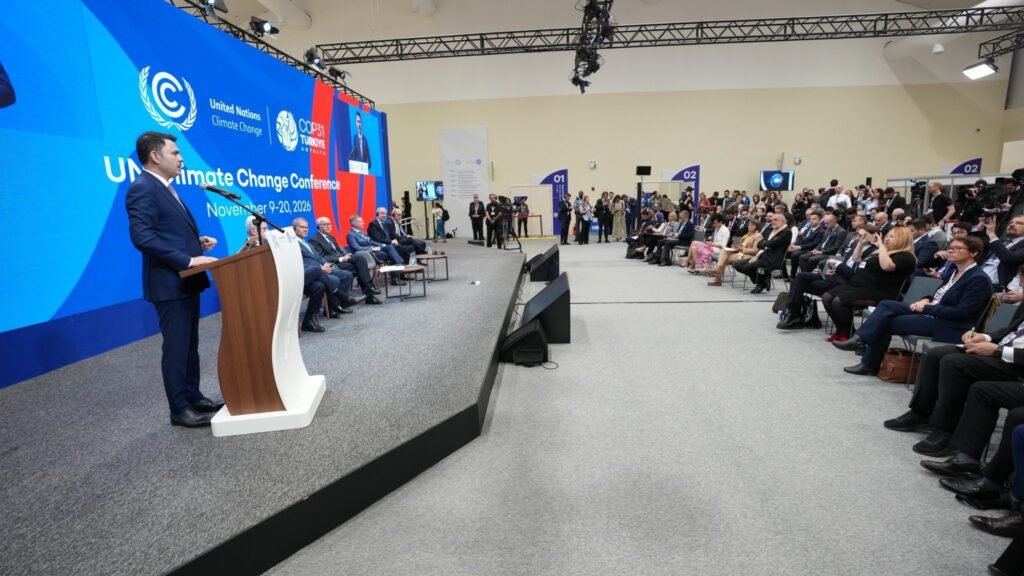
The call, outlined in AGRA’s position paper, From Climate Vulnerability to Farmer Prosperity: AGRA’s Position for COP31 and the Road to COP32, comes as world leaders gather in Antalya, Türkiye, for the 31st United Nations Climate Change Conference (COP31).
“Africa is not asking the international community to fund vulnerability but to invest in resilience and prosperity,” read a statement shared on its X (formerly Twitter) platform.
The organisation is advocating for coordinated climate action that connects agricultural production to storage, clean energy, processing, finance and markets
AGRA argues that climate adaptation should go beyond protecting farmers against droughts, floods and other climate-related shocks to transforming food systems into productive, inclusive and profitable economies.
Its position paper identifies three major challenges holding back Africa’s agrifood sector: low and unreliable agricultural production, limited capacity among farmers to capture value from their produce, and weak institutional, financial and market systems that prevent successful solutions from expanding.
Climate change, the organisation notes, intensifies these challenges by increasing production risks, damaging natural resources and disrupting agricultural value chains.
To address them, AGRA is proposing investment in climate-resilient, nature-positive agrifood corridors that link production landscapes with aggregation centres, storage facilities, clean energy, processing infrastructure, logistics, digital services, financing and regional markets.
The approach is intended to reduce post-harvest losses, improve market access, strengthen food security and ensure farmers receive better returns from their produce.
Agrifood systems transformation
The organisation also sees the transformation of agrifood systems as an opportunity to create productive employment and viable businesses for Africa’s growing youth population, particularly young women and men working across agriculture, transport, processing, energy, technology and financial services.
In this, the alliance is calling for a financing framework that brings together government investment, grants, concessional climate finance and responsible private-sector capital.
It says public and concessional funding should support essential infrastructure, climate information services, institutional capacity and vulnerable farmers, while guarantees and other risk-sharing mechanisms should encourage private investment in commercially viable agricultural enterprises.
It further wants farmer organisations, agricultural small and medium-sized enterprises, and businesses led by women and young people to have direct and simplified access to climate finance and a meaningful role in investment decisions.
Adaptation finance
The position paper further calls for adaptation finance to be scaled up, predictable and accessible, proposing that the commitment to at least triple adaptation finance by 2035 should be treated as a minimum target.
It calls for climate funding to prioritise grants and concessional financing rather than deepen the debt burden of African countries.
Looking ahead
AGRA now sees COP31 as a critical stepping stone towards COP32, scheduled for November 2027 in Addis Ababa, Ethiopia.
While Antalya should secure greater recognition, financing commitments and investment partnerships, Addis Ababa should demonstrate African-led implementation and measurable results.
The organisation wants progress assessed through tangible outcomes, including improved farmer incomes, reduced post-harvest losses, stronger regional trade, increased employment, better nutrition and the protection of natural resources.
Through its engagement with governments, regional institutions, financial organisations and private-sector partners, AGRA says it will help develop investment opportunities, mobilise partnerships and strengthen the capacity of African institutions to lead implementation.
Its central message is that climate adaptation must become an engine of economic transformation, enabling farmers to withstand climate shocks while producing more, earning more and building prosperous livelihoods.
For AGRA, Africa’s climate future must be measured not simply by the amount of climate finance mobilised, but by whether investments translate into lasting prosperity for farmers and stronger, more resilient food systems.