A small sorghum trial in Kenya, a formal partnership proposal and a nudge from Kigali suggest Kenya is becoming NASDA’s anchor for U.S.–Africa agricultural engagement.
By Benta Itivi, October 5, 2026, One hundred tonnes of sorghum is barely a rounding error in global grain trade.
Yet at Farmers’ Choice, the Kenyan meat processor, that modest volume became one of the most telling outcomes of a five-day U.S. agricultural mission in August. It speaks to a question that has become harder to ignore since early 2025, when the U.S. foreign-assistance landscape changed: what comes next for the U.S.-Kenya relationship? For decades, U.S. support had been a familiar part of Kenya’s development landscape.
Agriculture offers one answer. Not a replacement for aid, but a different kind of relationship, built on what each side can bring to the other: trade, investment, technology and expertise. That is the ground the National Association of State Departments of Agriculture (NASDA), which speaks for the top agriculture officials of all 50 U.S. states and four territories, is working in Kenya, with one clear aim: stronger U.S.-Kenya agricultural trade.
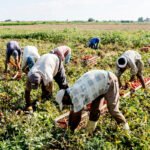
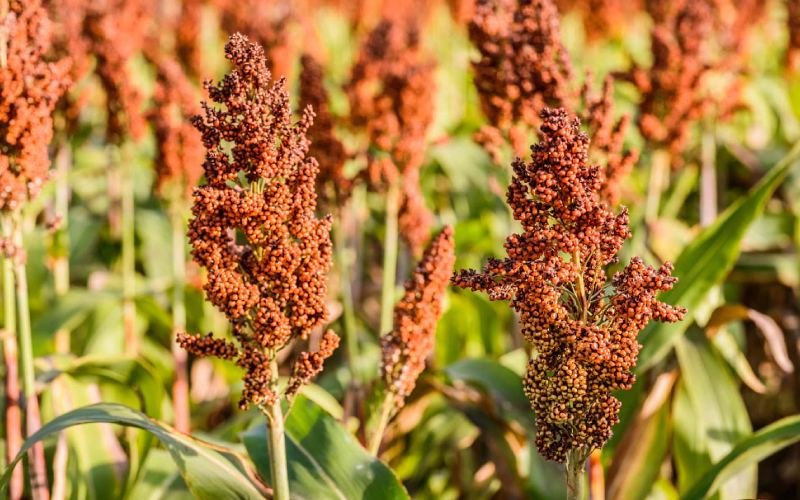
The sorghum was meant for animal feed, and feed is where Farmers’ Choice feels the pressure. Maize and soya are costly and scarce, and feed can account for close to 70% of a pig farmer’s production cost. When the delegation raised U.S. soybean meal, distillers grains and sorghum as alternatives, the response was direct. “We are very keen, and we are hoping this group can help us with insights on how to access those sources,” Farmers’ Choice Head of Strategy Samuel Ngugi said. Asked how much sorghum a trial would need, the company’s answer was specific: around 100 tonnes of non-GMO sorghum.
It is small. But the stakes are not. “If we can solve our raw material sourcing, we think we could roughly double our capacity within two years and potentially increase it tenfold within five to ten years,” Ngugi said. “It is our single biggest constraint.”
This is how a relationship becomes real: someone has a need, someone else can supply it, and someone has to make the numbers work.
The same search for practical connection points surfaced across the Kenyan engagement. At Ol Pejeta Conservancy, the talk turned to livestock genetics suited to Kenyan conditions. At the Council of Governors, which brings together Kenya’s 47 county governments, the conversation turned to institutions: how U.S. state agriculture departments and Kenyan counties, which run extension, animal health and cooperative support, might work together. At a university leaders’ dialogue, the question was how knowledge travels from research to the farmer’s field.
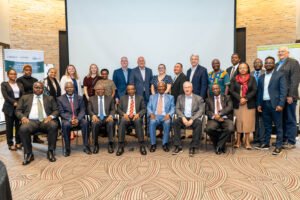
For NASDA, the learning is not one-way. Speaking at the university leadership dialogue, New Mexico Department of Agriculture Secretary Jeff Witte said Kenya had become a major focus because of the “many important interactions” between the two countries. “Things that we can learn and take back home,” he said, adding that NASDA could also share its own experiences with Kenya.
Taken together, the stops revealed something larger than any one deal. Kenya offers a place where trade, technology, institutions and knowledge can be tested at once, in real value chains. That is what makes it an emerging anchor, rather than simply a stop on an itinerary.
Days later, the conversation moved to Kigali, Rwanda.
At the Africa Food Systems Forum (1–3 September), NASDA held fourteen bilateral meetings with governments, African Union institutions, researchers, farmer organisations and private-sector players. Across those conversations, the same practical questions kept returning: how to grow agricultural trade, how to improve livestock genetics and feed, how to strengthen extension and research, and how to get products through standards and regulatory systems.
And Kenya was in the room.
After its 3 September meeting with NASDA, Kenya’s Ministry of Agriculture and Livestock Development submitted a formal proposal asking NASDA to become a strategic partner in building a pipeline of U.S.–Kenya agri-food investments. Its priorities include a Kenya–U.S. trade and investment mission, standards alignment and state-to-county partnerships.
The conversation was no longer about whether the two countries could cooperate, but about how.
A regional voice agreed. The Association for Strengthening Agricultural Research in Eastern and Central Africa (ASARECA) urged NASDA to keep investing in Kenya while engaging across the region, to continue the Kenya programme as it weighs expansion, and to share lessons from the Kenya work for wider regional benefit.
That is the anchor idea in its simplest form: prove the model in one country, then carry what works further.
Counties must be matched with states, investors with opportunities, and implementation work must turn conversations into defined interventions.
But somewhere in Kenya, a processor is waiting to learn whether 100 tonnes of sorghum can be worth the trip. If a trial goes ahead and works, the next chapter of U.S.–Kenya agricultural