
By Lominda Afedraru
Women occupy a central place in the fishing sector in Uganda, representing 70 -87 percent of fish workers. Most of them are involved in artisanal fish processing and trade. However, recent efforts by different actors such as Uganda National Women’s Fish Organisation (UNWFO) have encouraged women’s participation in fish farming and other lucrative aspects of the sector. The association was established in 2015 and became operational in 2019. It aims to strengthen the participation of women and youth in sustainable fish production and trade.
The organisation, which has two million members from diverse regions of Uganda, provides a platform for knowledge sharing, capacity building and advocacy. These members are from 384 small groups across the country, including Katosi Women Development Trust, Packwach Women Fisheries Association and Nakasongola Women Fisheries Association. Experts such as researchers and academics from universities can join individually, subject to pay of membership and annual subscription fees.
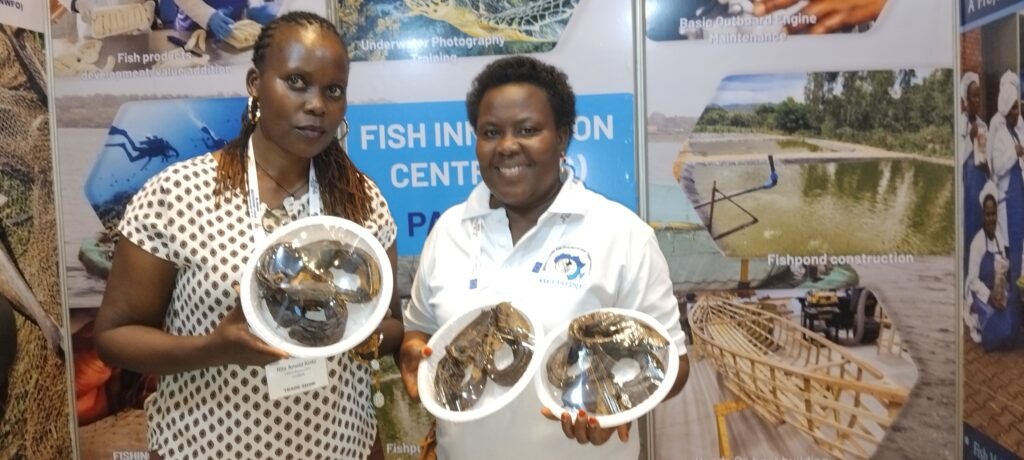
Ms Rita Amolo Kintu, the general secretary of UNWFO, says the association believes in the power of collective action to address specific challenges faced by women and youth in fisheries and aquaculture to unlock their full potential. For instance, when women go to the bank to access loan facilities, they are asked to bring their husbands to append their signatures, meaning they can’t access financial support individually.
Women also face difficulties acquiring their own land from money obtained from fish business. During land acquisition process, it is always a requirement that their husbands must be party in signing documents.
The association has helped in sensitising the women about how to navigate the barriers and the opportunities available to them. The association also sensitises the women on best practices in fish handling and value addition, including smoking fish using affordable fish kilns and packaging, to attract better market prices.
Achievements
Through UNWFO’s lobbying of organisations such as Food and Agriculture Organisation (FAO), women groups were given boats and raised racks to dry their fish at different landing sites. Apart from drying and smoking fish, the women are processing fish sauces for which the association has secured market access to Canada.
They are awaiting communication to start exporting Ugandan fish products to the Canadian market after a sample they were asked to send was accepted. The association’s achievements include acquisition of a training facility in Wakiso where a number of women have gained skills on international standards of fish value addition as well as book keeping.
Since most of the women engaged in fish value chain are in the reproductive age, the association is lobbying development partners and the government to set up child care centres at all landing sites.
For the women in Packwach in West Nile there is need for a shelter where they women can operate because at the moment they stand by the road side at bus stop station under sunshine and rain which is not healthy.
Success stories
Ms Martha Nangobi is a teacher by profession who taught in a number of schools including Kiira College Butiki. She did not realise her dream of economic empowerment until she joined the fish business having been lured by a friend based at Kiyindi landing site in Jinja.
With capital of UgShs20, 000 she began selling readily eatable fried silver fish. She has since expanded her business, selling smoked, dried, fresh fish and fish sausage. She went ahead to mobilise women at Katosi landing site to form Women of Hope Fish Processors Association, which she serves as chairperson. Through a partnership with FAO, the women have received ice cube cooling boxes and 40 raised racks to dry silver fish. Ms Nangobi is also holding the post of regional coordinator of the African Women Fish Processors and Traders Network (AWFISHNET), formed to tap into the African fish trade market. Ms Amolo, who is a civil engineer by profession, is now engaged in designing fish ponds and fabricating fish Kilns for fish processing companies. She recently designed a fish smoking kiln for a fish factory in Mityana with 300 Kg capacity.
She can develop much smaller ones which can accommodate 50kg for small-scale fish processors She also designs boats for fishing companies as well as racks, driers and fish mixers for powder fish products. The association has teamed up with the children’s unit at Mulago Hospital where during Covid-19 period they donated boxes of powder silver fish products to boost sick children’s immune system. It operates a stall at the hospital where powder fish products are sold at subsidised price.