By Zuwena Shame
The International Livestock Research Institute (ILRI) and the Centre for Tropical Livestock Genetics and Health (CTLGH) made a major milestone in global livestock genetic conservation with the expansion of their pioneering primordial germ cell (PGC) biobanking technology to Asia. Building on successful work across Africa, the partnership is now deepening scientific collaboration with the Indian Council of Agricultural Research (ICAR) to safeguard India’s rich diversity of indigenous chicken breeds and to strengthen climate-resilient, smallholder-driven poultry systems across the region.
This strategic expansion elevates India’s leadership in avian genetic conservation and positions Asia as a critical hub in the global effort to secure the genetic foundations of future poultry improvement. Through cutting-edge reproductive biotechnology, including in vitro PGC culture, cryopreservation, and surrogate host systems, the initiative ensures long-term preservation of locally adapted chicken genetics while enabling future regeneration of conserved lines.
These capabilities are essential for building more resilient poultry systems in the face of climate change, emerging diseases, and rapidly shifting market demands. As part of this expansion, an international training workshop on ‘PGCs biobanking and surrogate technology for conservation and development of chicken genetic resources’ was held from 27–31 October 2025 at ICAR–Central Avian Research Institute (CARI), Izatnagar.
The workshop was jointly organised by ICAR–CARI Izatnagar, ILRI (Delhi, Ethiopia and Kenya), CTLGH, and the Rosling Institute of the University of Edinburgh. Throughout five intensive days, 16 scientists from ICAR institutes, State Agricultural Universities (SAUs), and wildlife research organisations received advanced training in ex[1]situ conservation of poultry genetic diversity. Participants gained hands-on experience in isolating, propagating, and cryopreserving chicken PGCs, stem cells capable of developing into gametes (oocytes and sperm).
These techniques represent the most advanced tools currently available for conserving avian biodiversity, enabling future restoration of breeds and supporting science-led improvement programmes. Under expert guidance, trainees successfully isolated circulating PGCs from blood, blastoderm, and gonadal tissues; established in vitro cultures; and executed cryopreservation procedures. The workshop significantly enhanced national capacity in reproductive biotechnology, laying the groundwork for a robust, India-led PGC biobanking platform with global relevance.
The ILRI–CTLGH partnership’s expansion into Asia underscores a shared commitment to equitable, sustainable livestock development and to ensuring that smallholder farmers benefit from genetic innovations. By safeguarding the genetic diversity of indigenous chicken breeds, many of which are uniquely adapted to harsh environments, this initiative provides a durable foundation for resilient poultry systems that support nutrition, income generation, and livelihood security for millions of rural households. This knowledge transfer marks a pivotal step in strengthening national capacity to conserve India’s rich indigenous poultry genetic resources and lays the technical foundation for broader regional collaboration in poultry genetic improvement.
Building on successful deployments across Africa, the PGC biobanking platform introduces a transformative approach to avian genetic conservation, one that enables precise, long-term cryopreservation and future restoration of native chicken breeds. Its expansion into Asia is poised to accelerate efforts to safeguard the continent’s exceptional yet increasingly vulnerable poultry germplasm, which remains central to food security, climate resilience, and the sustainability of smallholder poultry systems.
By institutionalising these advanced biotechnologies, the ILRI–CTLGH– ICAR partnership ensures that local scientific expertise is fully equipped to manage, regenerate, and utilise conserved chicken lines in support of national research and development priorities.
“Asia, and India in particular, is home to some of the world’s richest and most threatened indigenous poultry diversity,” said Christian Tiambo, Scientist and Lead of the Cellular Resource Biobanking and Assisted Reproductive Technology Programme at ILRI.
“By combining ILRI and CTLGH’s scientific expertise with ICAR’s vast genetic resources and national reach, we are creating a powerful alliance to protect these breeds and ensure they remain available for future generations.”
Under the new collaboration framework, the three institutions will co-develop PGC biobanking protocols tailored to India’s indigenous breeds, scale local training in cryopreservation and surrogate-host technologies, and jointly design research pipelines for breed restoration and productivity enhancement.
These integrated efforts aim to advance national and regional aspirations for resilient poultry systems capable of withstanding climate shocks, emerging pathogens, and surging demand for high-quality animal-source foods.
“This partnership marks a transformative moment for poultry science in India,” said Dr. J. S. Tyagi, a director at ICAR–CARI. “PGC biobanking will not only preserve our invaluable native breeds but also empower scientists with new tools to drive innovation in poultry breeding, conservation, and smallholder resilience.”
The initiative aligns with global priorities under the FAO’s Global Plan of Action for Animal Genetic Resources and advances a shared agenda for equitable access, benefit-sharing, and sustainable use of livestock biodiversity. At a time of rising demand for poultry products and growing threats to indigenous genetic resources, this collaboration offers a timely, forward-looking response to safeguard Asia’s genetic heritage.
The expansion of ILRI and CTLGH’s PGC biobanking platform to Asia reinforces their commitment to deploying advanced science for development impact, ensuring that small-scale farmers, especially women and youth, benefit from resilient, productive, and diverse livestock resources.
Together with ICAR, the partners are building a globally connected, technologically empowered network for poultry genetic conservation, one capable of both protecting biodiversity and driving science-based solutions for the future of livestock production.
Linkages to Asian Chicken Genetic Gains initiative.
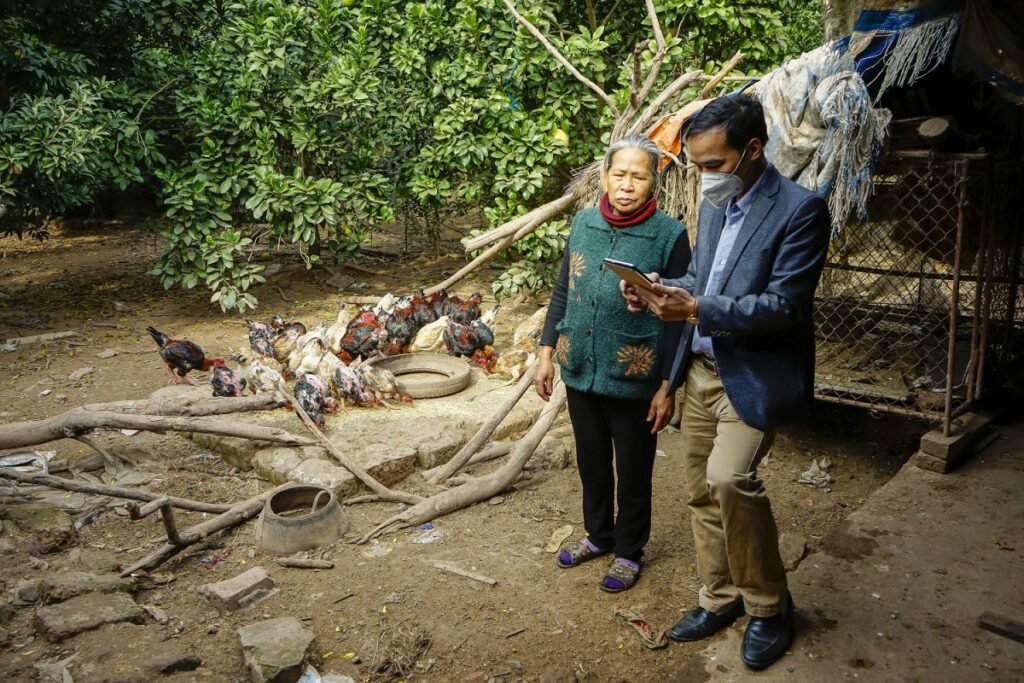
The biobanking initiative is closely aligned with ILRI’s Asian Chicken Genetic Gains (AsCGG) project, which works to deliver locally adapted, high-performing chickens to smallholder farmers in Cambodia, Myanmar, and Vietnam. Drawing on lessons from African poultry improvement programmes, AsCGG emphasizes South–South learning to accelerate the adoption of resilient, productivity-enhancing chicken lines across Southeast Asia.
Integrating PGC biobanking into this agenda ensures that conserved germplasm becomes a strategic resource for ongoing selection, breeding, and rapid dissemination of improved genetics. This linkage creates a powerful dual focus: driving immediate productivity gains for farmers while securing the long-term conservation of Asia’s diverse poultry genetic resources. Together, ILRI and CTLGH are advancing a sustainable, climate[1]resilient regional poultry development pathway that bridges innovation, conservation, and smallholder impact.
Sustainability and intellectual property considerations
While biobanking and surrogate-host technologies hold transformative potential for poultry genetic conservation, their long-term impact hinges on the careful management of technical, regulatory, and ethical challenges.
Cryopreservation systems are capital-intensive and technically demanding, requiring uninterrupted power, rigorously maintained storage facilities, and highly trained personnel to safeguard the viability of stored germplasm over decades. Cross-border conservation initiatives must also navigate complex access and benefit[1]sharing (ABS) obligations under the Nagoya Protocol, ensuring that the use of genetic resources is equitable and that source countries and communities receive fair and appropriate benefits.
Intellectual property considerations further add to this landscape, particularly when biobanked genetic lines contribute to commercial breeding programmes, underscoring the need for transparent agreements on ownership, custodianship, and benefit distribution. Proactively addressing these risks is essential to converting technological breakthroughs into tangible gains for smallholder farmers, biodiversity conservation, and national breeding efforts.
Ensuring that governance frameworks evolve alongside scientific innovation will help secure the longterm sustainability, accountability, and inclusiveness of biobanking platforms.
“Expanding our biobanking platform into Asia and working closely with ICAR empowers local scientists and smallholder farmers alike,” said Dr Tiambo. “It ensures that indigenous chicken breeds, central to nutrition, livelihoods, and climate resilience, are conserved for generations to come.”
The initiative also reaffirms the importance of fair and transparent benefit-sharing under international agreements, protecting both the genetic resources and the communities that rely on them. By combining cutting[1]edge science with development priorities, ILRI and CTLGH are establishing a global benchmark for sustainable poultry genetic conservation, equitable innovation, and smallholder empowerment.