By Murimi Gitari
Q&A: Wairimu Munyinyi-Wahome, the Country Director for Heifer International Kenya, discusses the organisation’s evolving work from boosting farm production to building multiple value chains with the potential for income growth, job creation, and market expansion.
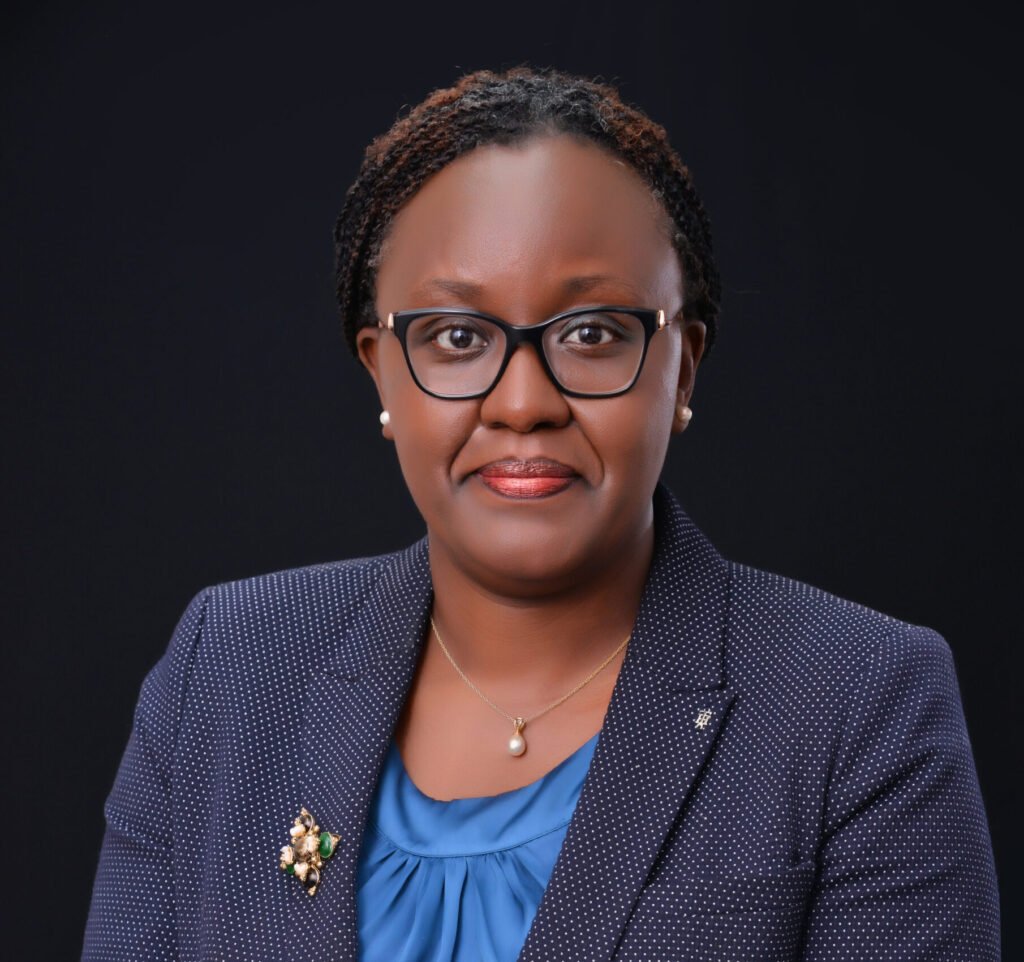
What is your role at Heifer International Kenya
I lead Heifer Kenya’s country strategy under the Practice for Change (P4C) programme. Through this work, we are supporting 625,000 smallholder farming households to earn sustainable living incomes by 2030.
A big part of my role is making sure markets work better for farmers. Because it’s not just about producing, it’s about whether farmers are actually earning more from what they produce. That means bringing the right people together, farmer organisations, government, financial institutions, and private sector partners, and making sure those connections lead to real opportunities. Whether it’s access to finance, reliable buyers, and services that help farmers grow all have come together for farming to work as a business.
I have spent over 20 years in international development across Africa and the Middle East, and one thing I’ve seen consistently is that farmers already have the drive and the know-how. What’s often missing are the systems and opportunities that allow them to turn that into steady income.
I have also seen what’s possible when communities are genuinely in control of their own development. That’s something I care deeply about, along with making sure women are fully included and that we remain accountable to the people we work with every day.
Heifer has had a long presence in Kenya. How would you describe its evolution, and which priority value chains or sectors are you currently focused on?
Heifer has been in Kenya since 1981, so for over four decades we’ve worked alongside smallholder farmers as a trusted, long-term partner.
In earlier years, the focus was mainly on helping farmers produce more, improving yields and strengthening on-farm practices. And while that still matters, we’ve learned that production alone isn’t enough if it doesn’t translate into income. The real question is whether farmers can consistently sell what they produce and earn well from it.
That’s what shapes how we work today. We take a more systems-focused view, looking at how farmers are connected to markets, whether they can access finance, and how the wider ecosystem supports or holds back their growth.
We’re currently working across dairy, poultry, red meat, and horticulture, value chains where we see strong potential for income growth, job creation, and market expansion.
But beyond the sectors themselves, the focus is on making sure farmers are not operating in isolation. We’re working to connect them to reliable markets, financial services, and the support they need to run viable, agricultural businesses.
Heifer is positioning itself as a systems actor rather than a project implementer. What does that shift look like in practice within Kenya?
We’ve moved away from focusing on individual projects and are now working to strengthen how markets function for farmers over the long term.
At Heifer, we use a market systems development approach. In practice, that means focusing on changes that are taken up and sustained by the people already in the system, farmers, cooperatives, businesses, and financial institutions. Because if they don’t continue the work themselves, the impact doesn’t last.
So instead of stepping in to solve problems temporarily, we look at what’s not working in the system and why. Then we work with those involved to address those gaps in ways that make sense for them. A big part of this is making sure each player benefits from doing things differently.
For example, in the dairy sector, we support cooperatives to improve governance and aggregation so they can supply consistent volumes and quality. We also work with financial institutions to design loan products that match farming cycles, so farmers can borrow and repay at the right times. And we help link producers to reliable buyers, so they have a stable market.
The goal is to build a system where finance flows because farmers are seen as viable clients, incomes are more predictable, and risks are better managed, not because an external programme is holding things together.
For us, that’s what lasting impact looks like: a system that continues to work, grow, and support farmers even after we step back.
You are working across four selected value chains. Where are you seeing the most significant shifts in closing the living income gap for smallholder farmers?
We’re seeing the most meaningful progress where productivity, reliable markets, and access to finance come together. When these align, incomes start to change in a real and sustained way.
A good example is Ainabkoi Farmers’ Cooperative. Over time, daily milk volumes have grown from about 1,300 litres to over 20,000 litres. Monthly payouts have also increased significantly, from around KSh 4 million to KSh 25 million.
But beyond the numbers, what really matters is that farmers now have more predictable incomes. That consistency changes everything, it makes farmers more bankable and better able to plan and invest.
We’re seeing similar progress on the financing side. Through our work under the TRANSFORM project, we’ve supported 19 saccos to design and roll out financial products that work for farmers. So far, that has unlocked over USD 1.2 million in financing, allowing farmers to invest in their farms and grow their businesses.
reliable. And that’s what closes the living income gap.
Farmer-producer organisations are central to your approach. How are they shifting farmers from fragmented producers to viable market actors?
They bring structure to what is otherwise very fragmented.
By bringing farmers together, they aggregate production and create consistent volumes. That makes it easier to connect to reliable buyers, gives financial institutions more confidence to engage, and reduces transaction costs across the board.
But their role goes beyond aggregation. When a cooperative is working well, it becomes a hub for local economic activity. You start to see transporters, processors, feed suppliers, and other small businesses grow around it, because there’s steady demand and more predictable cash flow.
Over time, that changes how farmers participate in the market. Instead of selling individually, in small volumes and at uncertain prices, they become part of an organised system that can plan, negotiate, and supply consistently.
Can you share an example where strengthening a farmer-producer organisation has improved access to finance, markets, or productivity?
Kenya’s dairy sector offers some very clear examples of how this works in practice.
At Katheri Dairy Cooperative, milk collection increased from about 5,000 to 18,000 litres per day. At Kabiyet, it grew from roughly 400 litres to nearly 30,000 litres.
What’s important is how that growth happened. It wasn’t just about increasing production, it came from strengthening governance, digitising records, and improving how the cooperatives are managed day to day.
As those systems improved, volumes became more consistent and operations more transparent. That, in turn, built confidence with lenders, and you start to see financing follow.
Kenya has a strong history of dairy cooperatives. What lessons from that sector are informing your work today, particularly around moving farmers from ‘invisible’ to ‘bankable’?
One of the biggest lessons is that visibility, backed by reliable data, is what makes farmers bankable.
When cooperatives and farmers keep clear records on production, deliveries, and payments, it becomes much easier for financial institutions to understand their performance and assess risk.
Digitisation has been key in making that possible. Not as an end in itself, but as a way to improve transparency, strengthen credibility, and build trust with lenders.
The P4C program aims to support 625,000 households by 2030. What are the key systemic constraints you are tackling to achieve that scale?
We are dealing with are a few interconnected challenges.
Access to finance is still a major one. Across Africa, agriculture faces a financing gap of about $65 billion each year, yet only 4–6 percent of formal lending goes into the sector. That shows how difficult it is for farmers and agri-businesses to access the capital they need to grow.
At the same time, many cooperatives and agri-SMEs are not yet in a position to work with formal lenders. Weak governance, limited financial records, and gaps in day-to-day operations make it hard for financial institutions to assess and support them.
There’s also the issue of fragmented markets. Without strong aggregation and reliable buyers, farmers are often selling in small volumes, at inconsistent prices, and with very little bargaining power.
What we’ve learned is that these challenges are closely linked. Finance doesn’t flow where markets are uncertain, and markets don’t function well when enterprises are not strong enough to participate.
Our focus is on addressing these areas together, strengthening enterprises, improving market connections, and working with financial institutions to ensure the right kind of financing is available. That’s what allows the system to work more reliably for farmers.
Access to finance remains one of the biggest challenges in agriculture. In your view, what is fundamentally broken in how agricultural finance currently works?
The problem isn’t a lack of capital, it’s that financial systems are not designed for how agriculture operates.
Farming is seasonal, exposed to weather and price risks, and often runs without formal data. But most financial products are built for businesses with steady, predictable cash flow. That disconnect is what limits access.
Many cooperatives and agri-enterprises are doing real business, but weak record-keeping and informal systems make them difficult for lenders to assess. At the same time, lending still relies heavily on collateral like land titles, which many farmers don’t have, even when they have consistent income. Even when finance is available, high interest rates and poorly structured insurance make it expensive and risky to use.
The issue is not just how much capital is available, but whether financial products and requirements actually match the realities of agriculture.
Heifer has invested in blended and catalytic finance models. How are these structures changing the risk-return equation for lenders and investors?
Blended and catalytic finance are helping us deal with a very practical problem, how risk shows up in agriculture. It’s not that agriculture isn’t a good investment. It’s that the risk often sits too heavily on the farmer or the enterprise, and that makes lenders cautious.
What catalytic capital does is take on some of that early risk. It gives enterprises the space to prove they can perform, repay loans, grow, and operate reliably. Once that happens, commercial lenders are more willing to come in.
We’ve seen this in practice. At Chepkorio Dairy Cooperative in Elgeyo Marakwet, catalytic financing helped bring down the cost of borrowing to about 10 percent, compared to the 14 to 18 percent you’d typically see from commercial lenders.
In our mechanisation work with Hello Tractor, about $4.5 million in catalytic funding helped unlock $7 million in commercial investment. That has led to 368 jobs, with repayment rates holding at around 90 percent.
Those are the proof points that matter. They show that when risk is structured differently, by combining catalytic and commercial capital, lending to agriculture starts to make sense and can perform.
There is a growing discussion around the missing middle in agricultural finance. How is Heifer addressing this gap for Agri-SMEs and farmer organisations?
The ‘missing middle’ exists because many of these enterprises are not yet ready to take on commercial finance.
So, our approach is to work with them step by step, strengthening governance, improving financial records, and building the operational discipline lenders expect, before linking them to finance.
What this looks like in practice is supporting enterprises to move from early-stage support into stable, long-term relationships with financial institutions.
The goal is to shift how they are perceived, from high-risk to credible borrowers with a track record that lenders can trust.
Your access to finance approach suggests that agricultural lending can be both viable and sustainable. What evidence are you seeing that supports this?
We are seeing the clearest results where finance is tied to value chains that are already working well.
In cooperatives like Lelchego and Lessos, investments in feed systems and productivity have led to about a 20 percent increase in farmer incomes.
At Kabiyet and Chepkorio, value addition, such as yoghurt and pasteurised milk, has opened up access to higher-value retail markets, which has a direct impact on returns.
More broadly, when financing is structured to fit how these businesses operate, it performs. Even with digital and structured financing models, repayment rates remain strong.
In mechanisation services, for example, repayment rates of around 90 percent show that smallholder agriculture can be a reliable investment when the system is designed to match its realities.
What this tells us is that when the right financial pathways are in place, enterprises move from being overlooked by lenders to being seen as credible, bankable clients.
Agriculture is often not seen as an attractive sector for young people. How is Heifer creating viable pathways for youth employment and entrepreneurship?
We are looking at opportunities across the entire value chain, not just in production.
Mechanisation is a good example. Through partnerships, young entrepreneurs are able to access equipment and offer services to farmers on a pay-as-you-go basis. That creates a business opportunity, not just a job.
We are also supporting young innovators through the AYuTe Africa Challenge, Heifer’s flagship initiative, Agriculture, Youth and Technology. In Kenya, this runs as the AYuTe NextGen programme, where we support young entrepreneurs with training, incubation, and financing to grow agritech solutions. So far, we’ve reached over 230 young innovators.
What we’re seeing is that when agriculture is approached as a business, with clear income opportunities, it becomes far more attractive to young people.
Women continue to face structural barriers in accessing finance. How is your approach to gender-responsive financing addressing this in practical terms?
Women play a major role in agriculture, but they still face significant barriers when it comes to accessing finance.
In many cases, they don’t own land, which limits their ability to offer collateral. They’re also less likely to be included in formal financial systems, which makes it harder to access credit.
Our approach is to address those barriers through how financial products are designed. That includes lending tied to value chains, using alternative forms of collateral, and putting in place risk-sharing mechanisms that make it easier for financial institutions to work with women-led enterprises.
What we’re seeing in practice is that women are reliable borrowers. In many cases, women-led cooperatives are performing just as well, if not better, in repayment.
And when women are able to access finance, the impact is immediate, productivity goes up, household incomes improve, and families are better able to manage challenges like drought, price fluctuations, and unexpected expenses.
Beyond access, how are you strengthening women’s leadership and decision-making power within farmer organisations and agribusinesses?
Access to finance needs to translate into real decision-making power.
As women become more involved in structured markets and financial systems, they are recognised for the economic role they already play. That starts to shift how they participate, both at household level and within cooperatives.
We are seeing more women take up leadership roles, especially in cases where systems support direct payments and create space for them to be part of key decisions.
Over time, that changes not just access, but influence, how income is used, how businesses are run, and how priorities are set.
You recently launched the She Has a Story to Tell campaign. What gap is this campaign responding to, and what change are you hoping to drive?
The campaign is responding to a visibility gap.
Women are active across agriculture, as producers, processors, and entrepreneurs, but their contributions are often overlooked, especially in how financial systems and investment decisions are made.
The International Year of the Woman Farmer in 2026 brings more attention to this, and to the need for greater investment in closing gaps in access to land, finance, and technology.
Through this campaign, we are sharing the real experiences of women in agriculture. The aim is to shift how they are seen, not as beneficiaries, but as people running businesses and driving economic activity.
That shift matters, because how women are perceived directly affects whether they can access finance, markets, and other opportunities.
Digital tools are increasingly shaping agricultural finance. How are technologies such as digital extension and farmer visibility platforms changing how farmers are assessed and financed?
Digital tools are changing how farmers are understood by lenders.
When production data, delivery records, and payment histories are captured consistently, farmers begin to build a visible track record. That gives financial institutions something concrete to work with, even in the absence of traditional collateral.
It also removes a lot of the guesswork. Instead of relying on assumptions about risk, lenders can assess actual performance over time.
That is what is making it easier for more farmers to access finance, because their reliability is documented and visible.
Partnerships with private sector innovators are a key part of your model. How are collaborations with companies like Hello Tractor improving access to services such as mechanisation?
These partnerships matter because they connect finance to something practical that farmers can use.
With Hello Tractor, for example, we’re supporting a pay-as-you-go model. Farmers can access mechanisation services when they need them, without the cost of buying equipment upfront. At the same time, young entrepreneurs are able to acquire tractors and run service businesses.
A big part of what makes this work is the data. Tractor usage, farmer demand, and repayment are all tracked digitally. That creates transparency and builds a performance history that lenders can rely on.
We are seeing strong results. About $4.5 million in catalytic funding has helped unlock $7 million in commercial investment, created over 2,800 jobs across Africa, and maintained repayment rates of around 90 percent. It also shows how asset-based financing can support both farmers and service providers as they grow their businesses.
Financing agriculture at scale requires coordinated action. How is Heifer working with government, financial institutions, and agribusinesses to unlock capital?
We play a role in bringing the right partners together.
That includes farmers, cooperatives, financial institutions, processors, and both national and county governments, making sure they are working toward the same outcomes and that risk is not sitting with one group alone.
Because in practice, financing agriculture at scale doesn’t happen in isolation. It depends on how well these different parts of the system work together.
The Kenyan government’s Bottom-Up Economic Transformation Agenda emphasises MSMEs, rural inclusion, and climate resilience. Where do you see the strongest alignment between national priorities and your work?
There’s a strong alignment, especially because agriculture sits at the centre of Kenya’s economy, it contributes about 26 percent of GDP and employs close to 70 percent of the rural population.
Our work supports the Bottom-Up Economic Transformation Agenda in very practical ways: by strengthening farmer organisations, expanding access to finance, and supporting farming systems that can withstand climate pressures.
We also align with the Kenya National Financial Inclusion Strategy, 2025–2028. For us, that shows up in improving the bankability of cooperatives and agri-SMEs, expanding access to finance for women and youth, and supporting financial products that match agricultural cycles.
What’s important is that these efforts are built into how markets function, so they can continue to work and grow over time, not just as one-off interventions.
Across Heifer’s broader portfolio, what lessons stand out that could help reshape agricultural finance systems in Kenya?
One key lesson is that finance on its own doesn’t work.
It delivers results when it’s built on strong foundations, good governance, reliable data, access to markets, and the right infrastructure. Without those, risk stays high and returns remain uncertain.
Another lesson is how we think about agricultural finance. It should not be seen as a high-risk sector to avoid, but as an investment in food security, rural jobs, and more resilient economies.
That perspective matters, because it influences how capital is allocated and how seriously the sector is supported.
What would it take for Kenya’s experience to serve as a scalable model for inclusive agricultural finance across Africa?
What Kenya is showing is that agricultural finance starts to work when a few things come together. When farmer organisations are strong enough to aggregate production and engage markets consistently, when financial products are designed around how agriculture actually operates, and when there’s coordination between government, lenders, and the private sector, you begin to see a system that holds. At that point, agriculture is no longer treated as too risky to finance. It becomes a sector that can attract investment, grow sustainably, and be replicated in other contexts.