
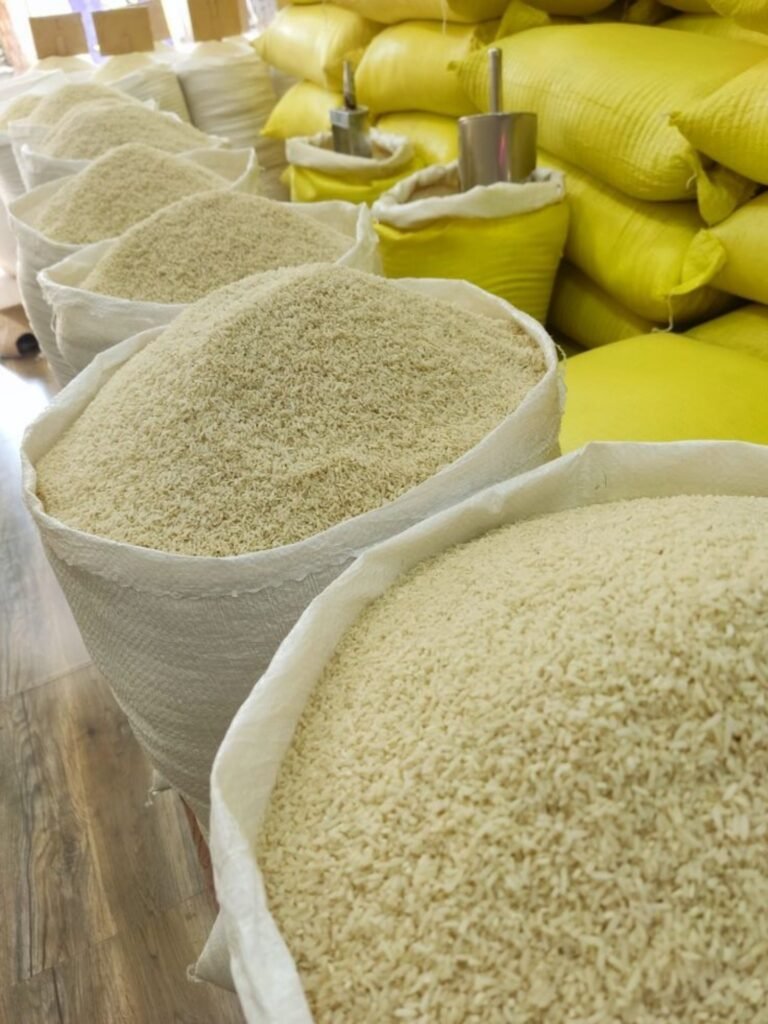
Packed processed rice by All Farmers Association of Nigeria (AFAN). The country is among many African nations that import rice to meet rising demand yet Middle East conflicts have disrupted trade routes affecting rice economies through several interconnected channels. Photo Credit: AFAN
By Zablon Oyugi, February 17, 2026: The escalating conflict in the Middle East is beginning to ripple across global food systems, with rice markets emerging as one of the most affected sectors due to disruptions in trade routes, rising energy costs, and tightening input supplies.
According to a recent brief titled “The Middle East War: Shockwaves Across Rice Economies” by Alisher Mirzabaev, Shyam Basnet, and Valerien Pede for the International Rice Research Institute (IRRI), the war is influencing rice economies through several interconnected channels, including disruptions to premium basmati trade, surging fuel prices, and constrained fertilizer availability.
Early signs of disruption are already visible with shipping routes through critical corridors such as the Strait of Hormuz have been affected, delaying cargo and raising uncertainty for exporters. Reports indicate that more than 400,000 metric tonnes of basmati rice—primarily from India—are stranded at ports or in transit due to the conflict, highlighting the vulnerability of global food supply chains to geopolitical shocks.
The IRRI brief notes that the Middle East plays a central role in global rice trade, particularly for high-value basmati exports. According to the report, disruptions in the region have immediate implications for exporters, many of whom rely heavily on Gulf markets.
India, for instance, sends the majority of its basmati rice exports to the Middle East, making it particularly exposed to instability in the region.
Rising energy prices
Beyond trade logistics, rising energy prices are compounding the problem. Oil prices have surged amid fears of supply disruptions, pushing up the cost of shipping, processing, and agricultural production.
Additionally, energy price increases are also feeding into higher transportation and milling costs, which could eventually translate into higher consumer prices if the conflict persists.
This trend is already evident in global markets as analysts warn that sustained high fuel prices could drive inflation and strain economies dependent on imports.
The broader economic fallout includes increased costs for farmers, many of whom rely on diesel-powered machinery and irrigation systems. In countries such as Bangladesh, limited access to fuel is already affecting rice cultivation, raising concerns about future harvests.
Fertilizer supply is another critical concern highlighted by the brief that disruptions in the Middle East—an important hub for fertilizer production and exports—are pushing up prices of key inputs such as urea.
Reports indicate that urea prices have already risen significantly, signaling potential risks for the next planting season if supply constraints persist.
Fertilizers are essential to global food production, with experts noting that nearly half of the world’s agricultural output depends on their use. Any sustained increase in fertilizer prices could therefore have far-reaching consequences, not only for rice but for broader food security.
Immediate price spike unlikely
Despite these challenges, the IRRI brief suggests that the global rice market is currently better cushioned than during previous crises. Ample supply and relatively stable prices mean that an immediate price spike is unlikely.
However, the report warns that prolonged disruptions—particularly if they affect key shipping routes or input supplies—could alter planting decisions and tighten markets in the medium term.
Economists echo this cautious outlook that while the full impact of the conflict remains uncertain, there is growing concern that continued instability could amplify inflationary pressures and disrupt food systems worldwide.
The extent of the damage will largely depend on the duration of the conflict and the resilience of global supply chains.
For now, the situation underscores the interconnected nature of energy, trade, and agriculture. As the IRRI brief concludes, the Middle East conflict is not just a regional crisis—it is a global shock with the potential to reshape rice economies and food security outcomes far beyond the immediate zone of conflict.