By Murimi Gitari
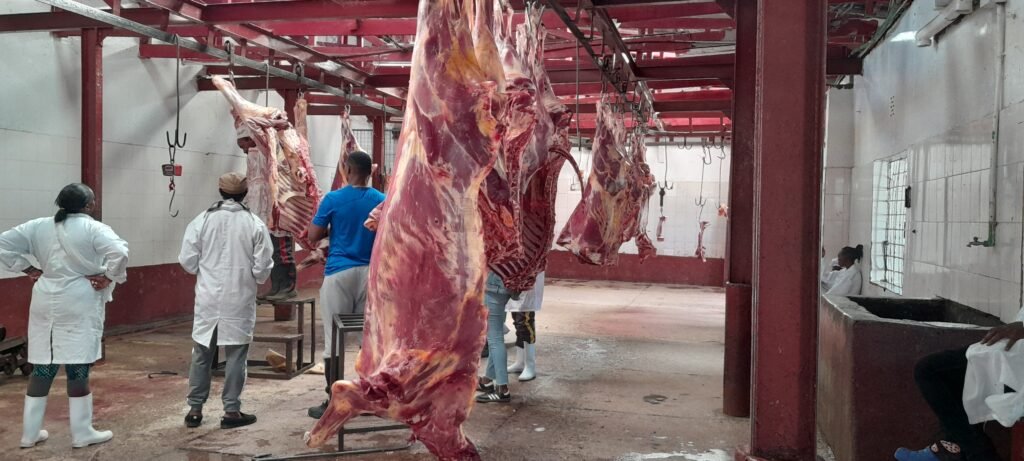
Ndunyu in Nairobi’s Dagoretti area is one of the city’s most important yet often overlooked economic hubs. Here, the rhythm of Kenya’s carnivore economy plays out daily, with slaughterhouses, traders, and butcheries working hand in hand to keep Nairobi’s plates full.
At the centre of this ecosystem is SM Thiani Slaughter House, a facility that has grown from humble family beginnings to a registered company. Its manager, Peter Waweru, explains how the slaughterhouse fits into the wider meat value chain.
Unlike what many might think, slaughterhouses in Ndunyu do not buy or sell livestock themselves. Instead, they provide slaughter services to meat traders.
“Our work as a slaughterhouse is to get the cows from the meat traders or vendors and offer them our services. We charge them 700 shillings per cow.
The government veterinarians who inspect the cows and the meat charge 250 shillings per cow, which goes to the government,” says Waweru.
Livestock arrives from as far as Northern Kenya, transported by herders and sellers to the nearby livestock market. Traders purchase the animals and bring them to the slaughterhouses, where the process begins.
Ndunyu hosts four privately owned slaughterhouses, none run by the government. Together, they form part of the backbone of Nairobi’s meat supply, serving both wholesale traders and the countless street butcheries that dot the city.
The slaughterhouses operate under strict hygiene protocols. Government veterinarians inspect both the animals and the facilities, ensuring compliance with safety standards. Running water taps are installed throughout the slaughterhouse, and thorough cleaning is mandatory.
All meat handlers must be medically certified and adhere to hygiene rules. Failure to meet these standards has serious consequences.
“Whenever inspectors say the slaughterhouse does not meet hygiene requirements, inspection services are withdrawn by the county government. This means business is shut down until we adhere to the procedures and protocols,” Waweru says. Slaughterhouses generate significant waste, from lagoon water to rumen. Disposal is tightly regulated by the National Environment Management Authority (Nema). Lagoon water must be filtered before being directed into sewer lines, while rumen is disposed of in farms as manure.
Waste management remains one of the most tightly regulated aspects of slaughterhouse operations in Nairobi. As per Nema’s waste management regulations, all effluent—commonly referred to as lagoon water—must be properly filtered and treated before being discharged into sewer lines or water bodies. Solid waste such as rumen is permitted for disposal in farms as manure, provided it is handled in a way that prevents contamination. Non-compliance with these standards can lead to penalties or even closure of facilities, underscoring the critical role of environmental safeguards in sustaining the meat value chain. But challenges remain.
“There are very few farms within and around Nairobi where we can dump this waste,” Waweru notes. At times, Nema halts disposal when filtering requirements are not met, creating operational bottlenecks. In past cases, facilities in areas such as Kiamaiko, a popular meat market in Nairobi’s Eastlands area, were shut down after being found to discharge untreated wastewater directly into rivers, posing serious environmental and public health risks.
Nema ordered these slaughterhouses to relocate to modern facilities with proper effluent treatment systems. Despite clear regulations, slaughterhouses face persistent challenges in meeting environmental standards. The high cost of installing and maintaining effluent treatment systems often strains smaller operators, while limited access to nearby farms makes disposal of rumen waste difficult.
In some cases, Nema has halted lagoon water disposal when filtering requirements were not met, leading to operational disruptions.
These risks highlight the delicate balance between sustaining Nairobi’s meat supply chain and adhering to environmental safeguards.
The busiest slaughter days are Monday, Wednesday, Friday, and Saturday, when between 200 to 250 cows are processed daily. On quieter days like Tuesday and Thursday, the number drops to around 50. This rhythm reflects Nairobi’s insatiable demand for meat, driven by butcheries and wholesale buyers who rely on fresh supply.
While slaughterhouses provide the service, traders like Alex Kamau drive the business. For him, success depends on careful selection of livestock.
“Whenever going to buy cows or livestock from the herders or sellers, we look at the quality and live weight of the cow. This helps us balance affordability and profits,” Kamau explains.
Traders sell meat at wholesale prices to street butcheries and walk-in customers seeking bulk quantities. Timing is everything. Early mornings bring strong demand and good prices. By afternoon, however, traders often slash prices to avoid carrying unsold meat into the next day.
“There will be fresh meat tomorrow, and it is difficult to sell meat that has already gone for an extra day,” Kamau says.
On average, Kamau handles 15 cows per week, a modest but steady business. His appeal to the government is straightforward: improve road infrastructure and enhance security around the meat market to ease operations. The presence of slaughterhouses has spurred growth in Ndunyu, with other businesses springing up around the meat market.
From transporters to feed suppliers, the ecosystem continues to expand, sustaining livelihoods and feeding Nairobi. Yet, challenges in waste management, infrastructure, and regulation remain pressing.
For Nairobi’s meat market to thrive sustainably, collaboration between traders, slaughterhouses, and government agencies will be key. As the city grows, so too will its appetite for meat.