
By Zablon Oyugi
For many Kenyans, gooseberries were once little more than wild fruits picked casually from bushes during childhood walks in the countryside. The small yellow berries, known by different local names across communities, grew naturally with little commercial value attached to them.
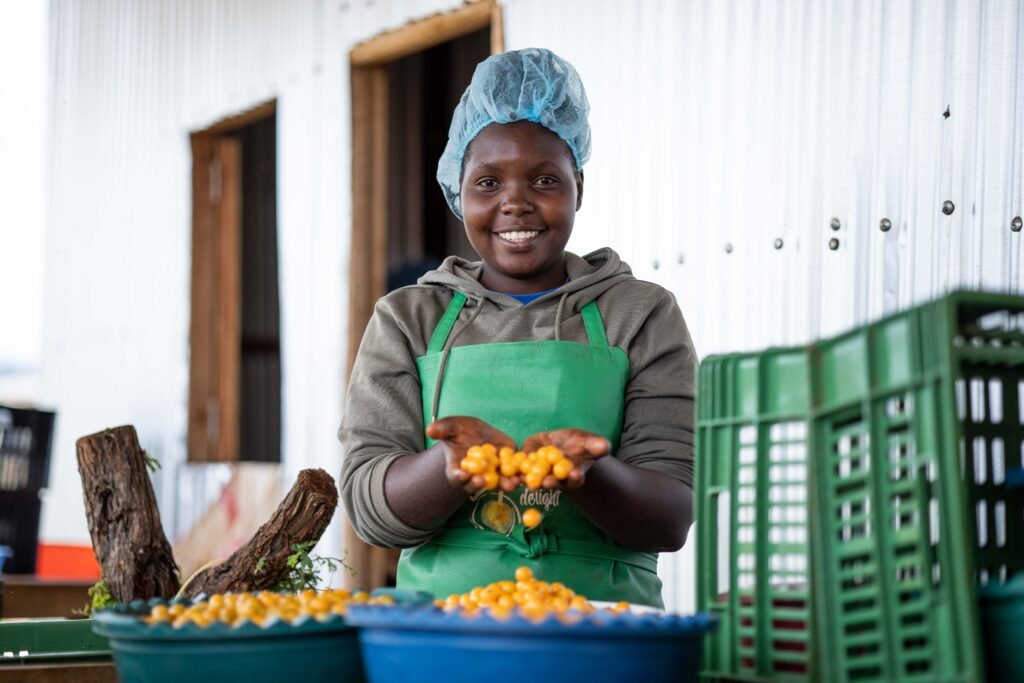
Today, however, the once-overlooked fruit is at the centre of a thriving agribusiness in Kenya’s Uasin Gishu County, where entrepreneur Viola Maina has built a successful processing enterprise turning the highly perishable fruit into wine, jam, juice, sauces and dried products.
Through her company, Gooseberry Delight, Viola processes between 300 and 500 kilogrammes of gooseberries daily — translating to nearly two tonnes every week.
What started as a small venture has now become a model of how value addition can transform a fragile fruit into a profitable agribusiness while ensuring minimal wastage.
Viola’s journey into gooseberry farming and processing began in 2015 after she noticed imported gooseberries selling at premium prices in supermarkets. The discovery surprised her because the fruit had always grown wildly in many parts of Kenya, often ignored or consumed casually by children.
“I became curious about the commercial potential of gooseberries and started carrying out extensive research by attending agricultural exhibitions and consulting experts to better understand the fruit and its health benefits.
That is when I discovered gooseberries could be transformed into a wide range of high-value products including jams, sauces, juices and wines,” said Viola.
At the time, she was transitioning from a long career in media and agribusiness marketing into full-time entrepreneurship and her interactions with farmers and researchers exposed her to the untapped potential of underutilised fruits, especially gooseberries, which researchers had identified as rich in vitamins, antioxidants and medicinal properties.
Gooseberries’ perishability
What particularly attracted her to gooseberries was their perishability as fresh fruits spoil quickly after harvesting, making it difficult for farmers to market them fresh over long distances. This was to her an opportunity rather than a challenge.
She initially started by buying small quantities of gooseberries from local growers and reselling them in Eldoret markets. As demand grew, she realised there was a bigger opportunity in value addition.
“Instead of relying only on selling raw gooseberries, I decided to focus on processing and preservation because the fruit is highly perishable. By converting it into products with a longer shelf life, I was able to reduce post-harvest losses while earning more value from every kilogramme harvested,” said Viola.
In 2019, she formally launched Gooseberry Delight and began producing gooseberry jam and juice before later diversifying into wines, sauces and dried fruits.
Today, nothing goes to waste in her processing line.
Fresh, high-quality berries are packed and sold in small punnets for fresh consumption, slightly ripe fruits are processed into juices and jams, while fully ripe berries are fermented into wine. Fruits that are overripe are dried to extend their shelf life and prevent losses.
Maximising profits
The company also produces sweet and hot sauces that have become popular with households and hotels in Eldoret.
This careful utilisation of every grade of fruit has enabled Viola to maximise profits while tackling one of the biggest challenges in fruit farming — wastage.
“Value addition is key,” said agricultural researcher at the Kenya Agricultural & Livestock Research Organization (KALRO) working with gooseberry farmers, noting that processed products fetch much higher returns than raw fruit sales.
For instance, a kilogramme of raw gooseberries may fetch farmers between Sh150 and Sh200 depending on demand, but once processed into jam, sauces or wine, the value multiplies several times over.
The entrepreneur’s success has also created a dependable market for farmers in Uasin Gishu and neighbouring counties. Viola works with contracted growers, supplying some with seedlings and training them on best farming practices to ensure consistent supply and quality.
“One of the biggest challenges I faced in the early stages of the business was unreliable supply because gooseberry farming was still relatively unknown commercially. Many farmers lacked proper planting materials and adequate knowledge on production,” she said.
To address this, Viola mobilised growers into cooperative-style groups where they could share knowledge, access markets and improve production collectively.
The model has gradually expanded gooseberry cultivation in the region, transforming the fruit from a neglected wild crop into a commercial enterprise.
Role of experts
Researchers from KALRO have also played a major role in supporting the enterprise through training on product development, food processing and nutrition.
According to KALRO scientists, gooseberries are highly nutritious and suitable for multiple processed products because of their natural pectin content, which makes them ideal for jam production.
“Training in modern processing and marketing opened my eyes to the full commercial potential of gooseberries. With the knowledge and skills I acquired, I focused on building a brand centred on quality and innovation,” said Viola.
Her products are now stocked in supermarkets and retail outlets in Eldoret, while hotels and restaurants have become major buyers of her sauces and juices. The company’s hot and sweet gooseberry sauce is among its best-selling products.
Beyond profits, the business has demonstrated how value addition can solve post-harvest challenges affecting many fruit farmers in Kenya. Fruits are among the most perishable agricultural products, and farmers often incur heavy losses during glut seasons due to poor storage and weak markets.
By processing the produce into shelf-stable products, Viola has created a sustainable solution that extends the usability of the fruit while stabilising incomes for growers.
Her approach also aligns with ongoing efforts by agricultural researchers to commercialise underutilised indigenous and wild fruits through processing and market development. Experts say many traditional fruits in Kenya remain economically untapped despite their nutritional and medicinal value.
Eying export
Viola now hopes to expand her processing capacity and venture into export markets as awareness of gooseberry products continues to grow locally and internationally. Demand for healthy natural foods, fruit wines and preservative-free products is increasing, offering further opportunities for processors.
From a humble beginning of buying and reselling small quantities of fruit, the Eldoret entrepreneur has built a thriving agribusiness that demonstrates the power of value addition.
By ensuring every gooseberry harvested is utilised — whether fresh, dried, fermented or processed — she has turned a highly perishable wild fruit into a sustainable source of income for herself and hundreds of farmers in the region.