
By Zuwena Shame
Women and youth empowerment in agriculture has powerful multiplier effects. Research consistently shows that women and young agripreneurs are more likely to reinvest their earnings into household nutrition, education, and healthcare—creating benefits that extend far beyond the farm.
In Tanzania, investing in women and youth through tailored financial products is not just good economics; it is essential for the country’s food future. From community savings groups to council-backed loans and digital finance, locally adapted financial solutions are unlocking potential that strengthens families, communities, and the national food system.
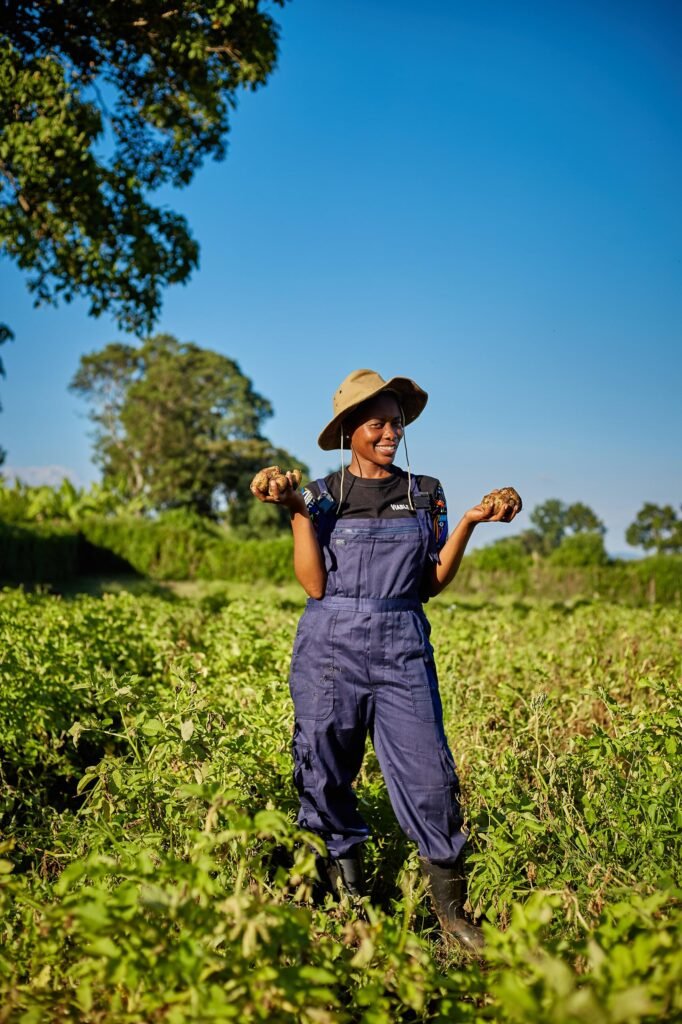
One such example is Crescentia Mushobozi, the chief executive officer and founder of Mbegu Nzuri Biotech Farms Ltd. As a young woman in agribusiness, Crescentia, 28, faced the common challenge of limited access to finance. She successfully acquired a group loan from the Arumeru Municipal Council, highlighting how collective financing remains one of the few viable pathways for youth-led agribusinesses.
Crescentia notes that securing loans as an individual agripreneur is particularly difficult for young entrepreneurs in the sector. In 2022, her journey took a turning point when she joined an accelerator programme run by the World Vegetable Center (WorldVeg). The programme opened doors to mentorship, technical support, and exposure to market-driven innovation.
“The loan helped me to some extent, but it was not sufficient, especially for us young people. I was not satisfied with that alone, so I had to look for different ways to make my dreams a reality,” Crescentia said.
Through this experience, Crescentia identified a critical gap in Tanzania’s agricultural value chain: the shortage of quality sweet potato seed. Drawing on her academic background in biotechnology and laboratory science, she began research aimed at improving seed availability and quality—an intervention with the potential to boost yields, farmer incomes, and food security.
After receiving capacity building support from WorldVeg, Crescentia began her journey as an entrepreneur and became self-employed by starting the production of sweet potato seed using tissue culture technology, alongside providing extension services.
“After struggling with loans and realising how difficult it is for a young small-scale farmer to access credit, I decided to put greater effort into strengthening my company and finding other ways to sustain my livelihood,” she said.
Her story illustrates how targeted financial access, combined with innovation support, can enable women and youth not only to overcome systemic barriers but also to drive solutions for Tanzania’s agricultural future.
Agriculture employs over 65 percent of Tanzania’s workforce, with women making up the majority of smallholder farmers. Yet access to tailored finance remains a persistent challenge.
“Most bank loans often require collateral and rigid repayment terms that don’t fit the seasonal nature of farming. Without financial products aligned to planting and harvest cycles, smallholders are left behind,” said Dr Ester Luhanga, an agricultural economist based in Dar es Salaam.
Youth agripreneurs face similar barriers. Without credit history or land titles, they struggle to secure startup capital for agri-processing businesses or tech-driven farming services.
Dorothea Liazer, a 38-year-old horticulture farmer from Kikatiti village in Arusha Region, began her agribusiness journey with support from her family after failing to secure start-up financing from formal financial institutions. Like many women farmers, she encountered rigid lending requirements that did not reflect the realities of women-led agribusinesses.
“Accessing start-up loans for agribusiness is extremely difficult for us women. Financing was my first major barrier, followed by other challenges such as limited technical skills, crop diseases, and pests,” Dorothea said.
She noted that financial institutions often require collateral such as land titles and property ownership assets that many women do not legally control effectively excluding them from formal credit systems. As a result, women are forced to rely on informal support networks to start and sustain their businesses.
Dorothea said her agribusiness only took off after receiving financial backing from her husband, to whom she had explained her passion and long-term vision for farming.
She said her husband has continued to support her even during difficult agricultural seasons.
Her story highlights the need for inclusive agricultural finance policies that recognise women’s realities, flexible collateral requirements, blended finance, group lending, and capacity-building support. Without such reforms, experts warn that women and youth will continue to be underrepresented in agribusiness, despite agriculture remaining a key driver of employment and food security in Tanzania.
The Tanzania Agricultural Development Bank (TADB) has launched pilot programmes offering agriculture-focused loans with extended repayment windows.
“We are tailoring products to suit smallholder cycles, and we’re working with youth associations to make finance accessible without heavy collateral,” a TADB spokesperson said.
Tanzania National programmes such as the Agricultural Input Voucher Scheme (NAIVS) also help farmers access subsidised fertiliser and seed, lowering upfront costs and increasing productivity.
With tailored finance, farmers like Dorothea and young innovators like Crescentia are not just surviving—they are growing businesses that boost local food availability and strengthen rural economies.
A recent study by the Food and Agriculture Organization (FAO) and International Fund for Agricultural Development (IFAD) shows that when women have equal access to productive resources, agricultural yields increase by up to 30 percent, benefiting entire communities.
Despite progress, gaps remain. Dr Luhanga stresses the need for policy frameworks that promote inclusive financial products.
“Public-private partnerships can help design risk-sharing mechanisms that encourage banks to lend to women and youth. We also need incentives for agro-startups and crop insurance schemes that protect farmers from climate shocks” she said.
For youths like Crescentia, access to tailored finance hasn’t just meant business growth—it has meant hope.
“Before, I thought I’d leave agriculture and move to the city,” he says. “Now I see a future here.”