
By Maarten Susan
Banks get the credit and the blame for agriculture’s financing gap. Neither is quite right. The real fix lies with the institutions built to reach the 80% banks can’t.
The agricultural finance gap isn’t shrinking. Ten years of donor programs, dozens of conferences, hundreds of reports, and the gap looks about the same size it did a decade ago. By some measures, it’s wider.
Estimates of the gap’s size vary widely, from $60 billion to well over $100 billion, depending on how the number is built. But nobody disputes the direction. It isn’t closing. The usual explanation is that banks aren’t stepping up. Push them harder, add another guarantee scheme, relax prudential guidelines, tighten the mandate, and the gap will close.
I don’t think that’s the whole story anymore. A disclaimer before going further: most African countries have two or three banks that genuinely push into agricultural finance, take the risk seriously, and build products to match, and they deserve credit. This isn’t aimed at them. But for most commercial banks, reaching the farmer is structurally out of reach, and that’s closer to inability than unwillingness. They simply lack the specialized skills and the last-mile distribution capacity it takes.
The problem isn’t ambition. It’s visibility.
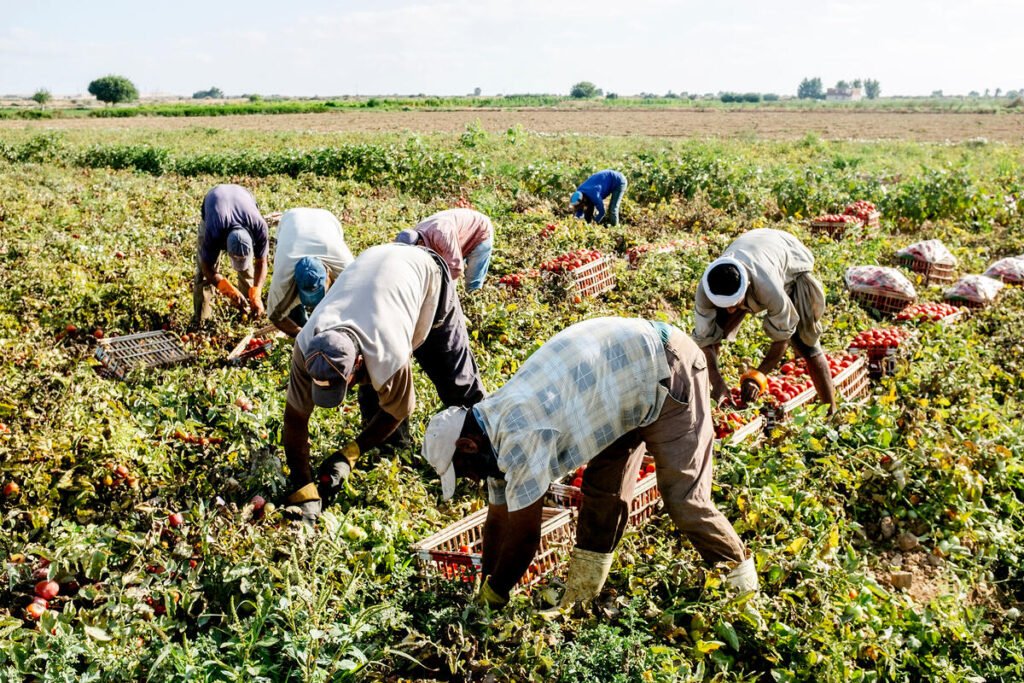
Take Kenya as a case study, not because it’s unusual, but because it has better data than most African markets, making the pattern easier to see. KNBS estimates that around 80% of Kenyan agriculture operates informally. No documentation, no audited accounts, no formal collateral, no registered address a bank’s systems can use. There’s a structural piece behind all this too. Egypt, Morocco, and Turkey each run large, state-backed agricultural banks, deep rural branch networks, subsidized funding, and technical support built into the same institution. East Africa has nothing comparable.
Kenya’s Agricultural Finance Corporation exists but lacks the deposit-taking capacity and balance sheet to operate at that scale. Arguably, that absence explains more of the gap than anything the commercial banks are or aren’t doing.
Banks are built to lend against what can be verified. IFRS provisioning rules trigger the moment a scheduled repayment slips, and a late rain-fed harvest isn’t a default. It’s a calendar problem. KYC requires paperwork that many smallholders don’t have. Unit economics punish small loans, since a $400 input loan costs almost as much to originate as a $400,000 one.
None of that comes down to a failure of will. It comes down to how the system is built, and systems like this rarely move just because a conference resolution asks them to.
If Kenya, with relatively strong data and a genuine cooperative tradition, still can’t get banks past that formal layer, it’s a reasonable bet that the same wall exists elsewhere, just less measured.
Where the real imbalance sits.
For decades, donors have been active in agriculture, running technical assistance programs of every shape and size. What gets less attention is where all that support lands.
The bulk of it flows to banks and institutions already active in agricultural finance, at the upper end of the value chain: processors, Agri-SMEs, exporters, and the cold chain. Many were lending there before the TA arrived.
Saccos, MFIs and other FinCos, the institutions closest to that informal majority, receive only a fraction of that support relative to where the actual reach is, not none, just badly out of proportion.
That’s the actual gap: not a shortage of lending, but a shortage of resourcing aimed at the wrong end of the value chain.
It’s an understandable mistake. Banks are easy to work with. They have offices, compliance departments, brand recognition, and people who respond to emails within a working week (hopefully in days). Smaller Saccos and other grassroots financial institutions are harder to reach, harder to standardize, and harder to report back to a donor programme manager.
But being easy to work with and well-positioned to close the gap are two different things, and funders have been optimizing for the first.
So who can actually reach the farmer?
Breaking this deadlock probably means marrying age-old lending principles with the technology available in 2026, not treating the two as alternatives.
Probably not the bank, at least not directly. But there’s a layer of finance built for exactly this kind of relationship: local, small-scale, and built on trust rather than documentation. Farmer groups pooling savings. Saccos lending against cross-guarantees instead of land titles. Community structures where everyone already knows who’s good for the loan, because they live three doors down and see each other’s harvest.
One way support could take shape is to establish a dedicated supervision unit for digital agricultural Saccos alongside existing cooperative regulation. Digital monitoring instead of manual inspection, so oversight scales without an army of field auditors. A shared digital back office, so small farmer groups can run on the same systems and reporting infrastructure as larger institutions, without carrying that cost alone. A path to concessional credit for those who can demonstrate performance.
None of this exists yet; it’s an idea rather than a program, but it answers a design question that keeps getting skipped: how do you supervise thousands of small, community-rooted institutions without either ignoring them or burying them in bank-grade compliance they were never built to carry.
The question worth asking.
Not “why won’t banks lend more to farmers.” That question has an answer, and the answer is mostly structural, not moral. The better question is what it would take to get technical assistance and donor attention flowing toward the institutions already positioned to reach the 80% banks can’t see.
Kenya won’t have the answer for the whole continent. But it’s as good a place as any to start testing one.
Maarten Susan is the Managing Director, AgriFinancing and a member of the Financing Agri-food Systems (FINAS) Secretariat.