By Panagrimedia Correspondent, February 17, 2026 Scientists, policymakers and agriculture experts from across Eastern, Southern Africa and Central Africa gathered in Nairobi to honor Dr. Suresh Lingadahalli Mahabaleshwara, renowned as Dr. Suresh L.M. a Maize Pathologist – Global Maize Program, whose 11 years of work with the International Maize and Wheat Improvement Center (CIMMYT) transformed the fight against maize lethal necrosis (MLN) and strengthened plant health systems across the African region.
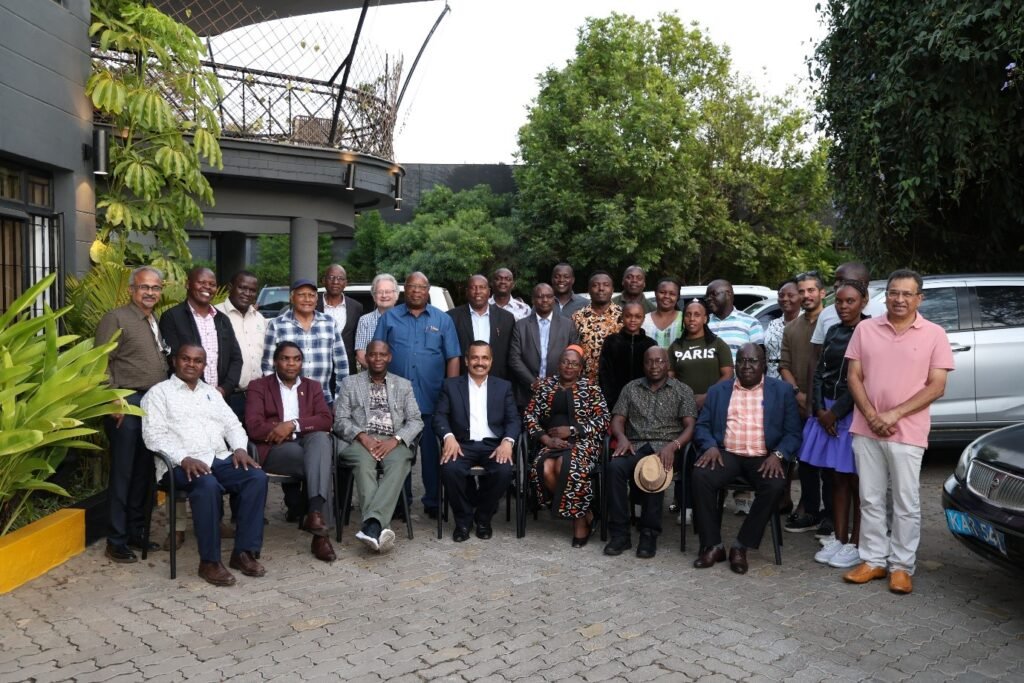 Group picture of the participants attending the award ceremony in Nairobi, Kenya
First reported in Kenya in 2011, MLN spread rapidly to neighboring countries and has since been confirmed in six eastern African nations, including Kenya, Ethiopia, Rwanda, Tanzania, Uganda, Democratic Republic of Congo and Burundi. Caused by a combination of the Maize Chlorotic Mottle Virus (MCMV) and Sugarcane Mosaic Virus (SCMV), the disease devastated maize fields, often wiping out entire harvests when infection struck early in the cropping cycle. Dr. Suresh played a central role in efforts to contain the crisis.
Working hand in hand with KEPHIS to contain and prevent the spread of MLN. Joining CIMMYT in 2015, he managed the MLN screening facility in Naivasha, established in 2013 in partnership with the Kenya Agricultural and Livestock Research Organization (KALRO). The facility became a global hub for screening maize germplasm under artificial inoculation, enabling the identification of hybrids with tolerance and resistance to MLN. Over the years, nearly 280,000 germplasm entries were screened, leading to the release of five first-generation MLN-tolerant elite maize hybrids in East Africa. Several second-generation CIMMYT-derived hybrids are now undergoing national performance trials in Kenya, Tanzania, and Uganda. His work also advanced understanding of epidemiological factors, particularly seed transmission of MLN causing viruses, while strengthening Kenya’s preparedness and early-warning system.
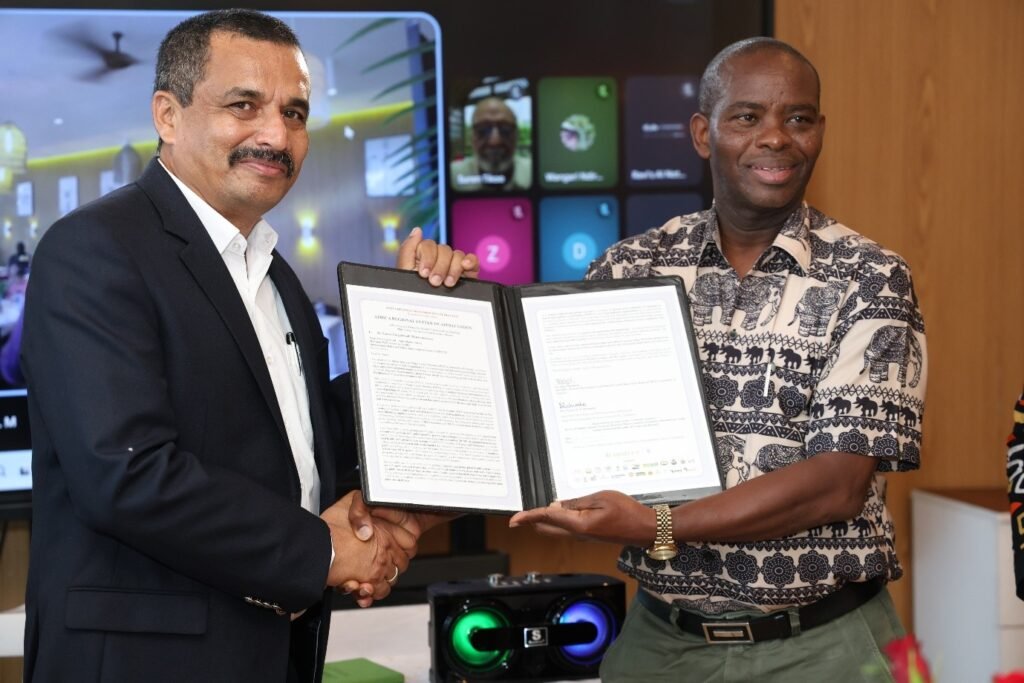 KEPHIS Managing Director, Prof. Theophilus Mutui presents the letter of Appreciation to Dr. Suresh, L.M
At his Award ceremony, held both physically and virtually, praises poured in from across the globe. Kenya Plant Health Inspectorate Service (KEPHIS) Managing Director, Prof. Theophilus Mutui, and the team presented Dr. Suresh with a certificate of appreciation, commending his role in harmonizing diagnostic protocols and strengthening phytosanitary systems. “Your contribution has been invaluable to national and regional efforts to prevent, detect, and manage MLN,” he said. Dr. Alice Murage, Acting Director General of KALRO, praised his scientific leadership; “Through our collaboration, the MLN screening facility in Naivasha has kept Kenya firmly on the global map, ensuring world-class phenotyping standards and enabling comprehensive MLN screening of KALRO’s entire germplasm portfolio,” she said. His incredible contribution to combat the transboundary threat in the Africa region is well recognized by honoring him with “Africa Region Food Security Leadership Award”. The award is presented to him by all the NARES, NPPO’s and private seed company partners of the MLN community of Practice in the Africa region.
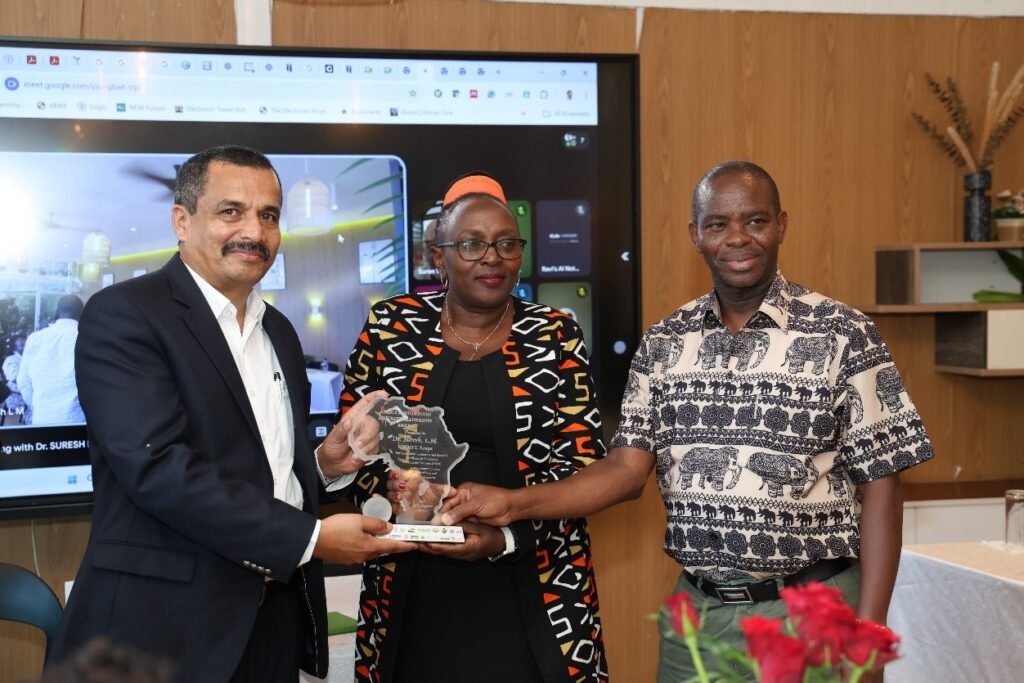 The Award is being presented to him by Dr. Alice Murage, Acting Director General of KALRO and Prof. Theophilus Mutui, KEPHIS Managing Director.
International colleagues echoed the sentiment. Tributes came from Zimbabwe, Zambia, Malawi, India, Uganda, Nigeria and the United States, praising his humility, generosity, and unwavering commitment to biosecurity. Born in Madasuru-Lingadahalli, a rural village in southern India, Dr. Suresh grew up working on his family’s farm. Inspired by his father, Mr. Mahabaleswara, recognized as a “progressive farmer” in the 1970s and 2000, he pursued agricultural science to help smallholder farmers overcome challenges of low yields, pests, and water scarcity. After earning degrees in Bangalore and completing his Ph.D. in Karnataka, he spent nearly two decades in the Indian seed industry, including 20 years at Monsanto, Seminis, Nunhems before joining CIMMYT.
Reflecting on his journey, Dr. Suresh told colleagues: “Maize diseases do not wait for meetings, policies, or permissions. They move fast, cross borders, and punish weak systems. When MLN arrived in Africa, it did not just infect fields, it exposed fractures in breeding pipelines, blind spots in diagnostics, and vulnerabilities in seed systems. Yet, instead of breaking us, it united us. Crisis became our classroom. Science became our shield. Partnership became our power.”
He thanked partners across Kenya, Tanzania, Uganda, Rwanda, Ethiopia, Zambia, Zimbabwe, and Malawi for turning the MLN crisis into collaboration and resilience. “Over the past 11 years, we did not just fight a disease. We built systems. We built capacity. We built confidence. And above all, we built friendships that no virus could defeat,” he concluded. Dr. Suresh, his legacy endures in the resilient maize hybrids now protecting farmers’ fields, the strengthened research facilities across Kenya, and the partnerships that transformed a regional crisis into a model of scientific collaboration for the world.