By Ngalame Elias
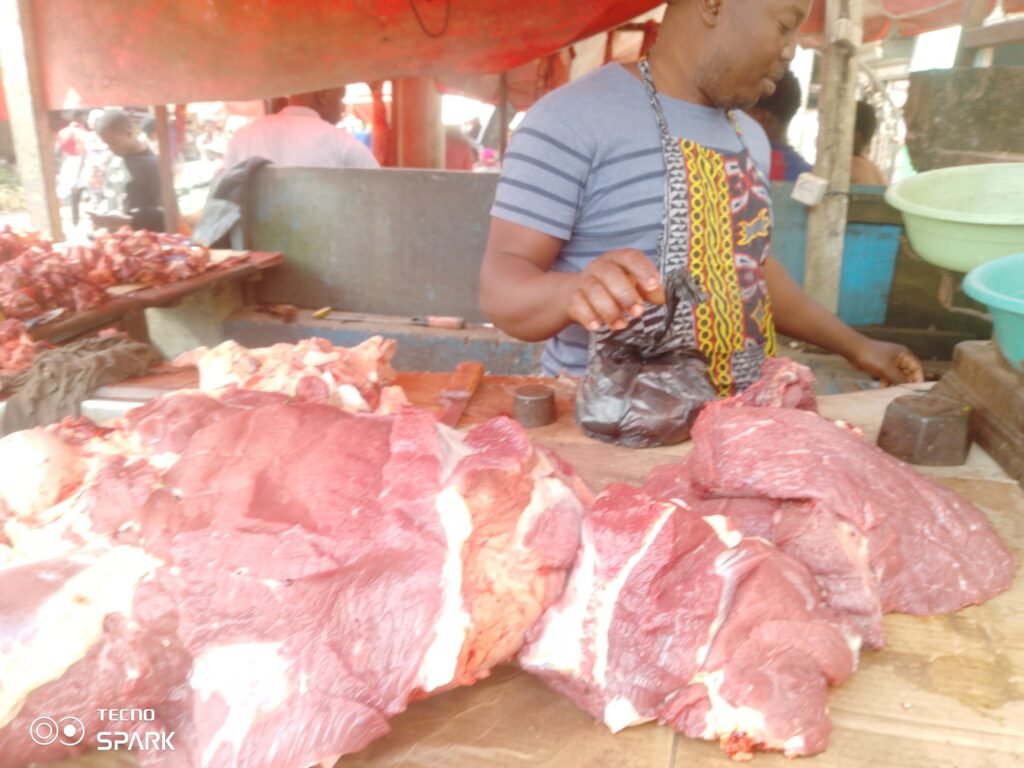
Cameroon’s Prime Minister Joseph Dion Ngute in March last year raised concerns about declining meat production in the country. Speaking at the opening of parliamentary session, he cited official statistics showing the country’s total meat production for 2024 dropped to 235,960 tons, representing a decrease of 74,040 tons or 23.8 percent compared to 310,000 tons in 2023.
The decline is partly blamed on prolonged insecurity in the two Anglophone regions of the Northwest and Southwest as well as Boko Haram incursions in the Northern regions of the country, the cattle farming belt. Experts also point to the deterioration of grazing lands and drying water sources in the North region, one of the main cattle farming areas, and livestock theft as contributing factors.
A general decline in production is observed across all sectors. The cattle farming sector saw a decrease of 35,869 tons in 2024, with 94,300 tons produced, down from 130,000 tons the previous year.
It is against this backdrop that the Cameroon government announced plans to support the sector with the establishment of two industrial cattle slaughterhouses, one in Douala and another in Bamenda in the conflicts affected Northwest region.
“These facilities are part of a broader effort to address the challenges facing the sector especially as 2024 data from the Ministry of Livestock showed a declining production rate,” the prime minister said.
The National Seed Production Centre in Wakwa in the Adamaoua region — Cameroon’s main livestock hub—is expected to support efforts to increase meat production.
The centre aims to generate over 500,000 doses of cattle semen and 300 embryos annually. The government also announced increase in subsidies to boost livestock and fish farming. Cameroon’s Minister of Economy, Alamine Ousmane Mey, recently signed funding agreements worth CFA13.55 billion with seven public institutions to support livestock and fishing production.
Of the total, CFA9.2 billion will go to the Cameroon Small and Medium-Sized Enterprises Bank (BC-PME) to finance private operators involved in products targeted by the Integrated Agropastoral and Fishery Import-Substitution Plan (PIISAH).
The remaining CFA4.3 billion will be allocated to Unvda Ndop, IRAD, the Cereal Board, Sodepa, and the Viva[1]Logone and Viva-Bénoué projects to strengthen rice, cereal, cattle-dairy, and seed/input production.
“The signing of these agreements marks a decisive step toward achieving PIISAH’s goals,” said the minister.
The plan aims to reduce Cameroon’s heavy reliance on imports. Between 2013 and 2022, the country spent an average of CFA3,000 billion per year on beef, rice, fish, wheat, maize, and edible oils imports.
To reverse this trend, Yaoundé launched a three-year integrated plan (2024- 2026) to boost local production and processing. Priority sectors include rice, maize, fish, and other key crops.
Although these measures are intended to enhance production, experts in the sector have called for additional support to address environmental degradation and insecurity, which continue to hinder growth in the livestock sector.
Experts say pastoral livestock production system in Cameroon faces many constraints, including limited access to inputs, degraded pasture lands, limited feed resources and insufficient water points for herds — all of which have been worsened by climate change. Other major constraints concern health and sanitary problems, leading to endemic animal diseases.
“Poorly organised pastoralist producers are slow to adopt improved animal husbandry practices, they are not equipped to manage access to pastoral resources in a sustainable manner, leading to regular conflicts with other users, such as farmers and fishermen,” noted Felix Agbor, chief of service in charge of livestock in the ministry.
Other challenges are limited availability of advisory services to promote innovative techniques and limited access to finance. “These factors result in low productivity of local breeds, poor livestock feeding management and animal health, and limited revenues for producers,” he added.