
By Murimi Gitari
Kenya’s Bt maize has cleared every scientific and regulatory hurdle in its path — insect trials, biosafety review, three separate government agencies. What it has not cleared is the courts. Dr James Karanja has spent 17 years building it. He is still waiting to hand it to a farmer.
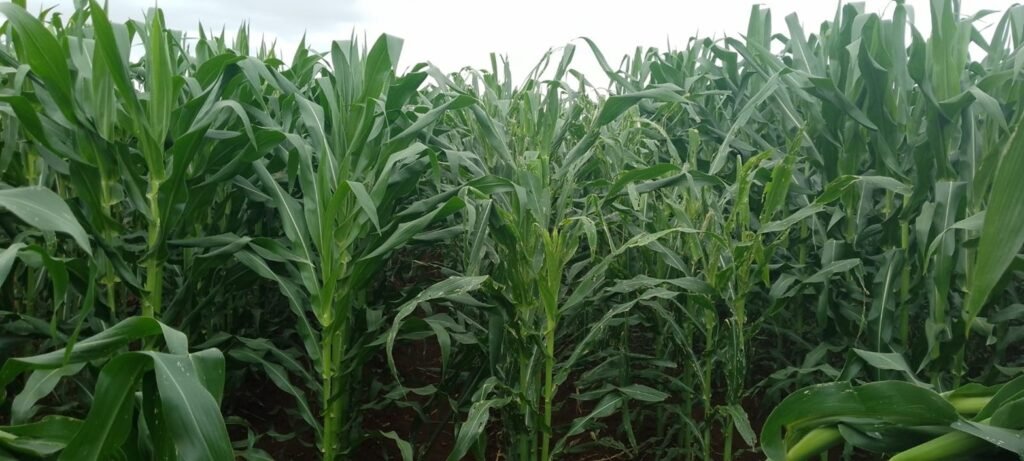
Inside a screened field plot at the Kenya Agricultural and Livestock Research Organization (KALRO) Kiboko, in the dry heartland of Makueni County, two rows of maize stand side by side under the same sun and the same soil. One row is riddled with the telltale bore-holes of the stem borer, its leaves shredded by fall armyworm, its cobs streaked with the grey mould that signals aflatoxin. The other stands almost untouched — full, green, heavy-headed.
The second row is not for sale. It cannot be. Not yet.
For Dr James Karanja, Centre Director at KALRO Njoro and principal investigator of the TELA maize project, that gap between the two rows of maize is also the gap between 17 years of research and a court injunction that, for now, keeps it locked out of Kenyan farmers’ fields.
“We have been losing over 60 percent of our maize production,” Dr Karanja said, describing the scale of the problem the technology was built to solve.
A decade and a half in the making
The story of Kenya’s Bt maize does not begin with a courtroom. It begins in 2008, with the launch of the Water Efficient Maize for Africa (WEMA) project — a partnership stretching across Kenya, South Africa, Mozambique, Uganda and Tanzania, backed by national agricultural research bodies, the International Maize and Wheat Improvement Center (CIMMYT), the African Agricultural Technology Foundation (AATF) and Bayer (formerly Monsanto). The goal was straightforward: breed maize that could survive moderate drought and resist the pests that were quietly starving the region.
By 2018, WEMA had already delivered results. More than 100 improved conventional maize varieties — sold in Kenya under the “Drought TEGO” brand, among them TSAVO 3106, TSAVO 4141, Pendo 4140, Kiongozi 5102 and Agripack 5117 — had reached farmers, offering yield advantages of up to 60 percent under drought conditions.
It was on that foundation that the TELA project was launched the same year, this time reaching further: using transgenic technology to build insect resistance directly into the plant. Nigeria and Ethiopia later joined the initiative. In Kenya, three Bt maize varieties — WE1259B, WE3205B and WE5206B — were tested, refined, and in March 2025, formally approved for commercialisation by three separate regulatory bodies: the National Biosafety Authority (NBA), the Kenya Plant Health Inspectorate Service (KEPHIS) and the National Environment Management Authority (NEMA).
They have not reached a single farmer’s field.
What the delay costs
The consequences of that delay are not abstract to Dr Karanja. They are measured in bags of maize and shillings spent on chemicals that do not fully work.
“If you combine fall armyworm and stem borers, farmers almost get nothing,” Dr Karanja said of the compounded damage the two pests inflict when left unchecked.
Losses two the two pests can run as high as 80 percent of a season’s harvest.
Kenyan farmers, in the meantime, spend more than Ksh12,000 per acre on insecticides and spraying, a cost Dr Karanja describes as both a financial and a health burden, given the risks associated with heavy pesticide use. Surveillance data gathered between 2012 and 2024 point to a further, less visible cost: heavy insect damage creates entry points for the fungal infections that produce aflatoxin, a toxin linked to liver cancer and other serious illness.
“The 80 percent yield loss figure remains the most compelling single metric underscoring the urgency of Bt maize adoption,” he said.
Kenya is not alone in facing this choice, and it is no longer at the front of the queue. South Africa and Nigeria have already commercialised Bt maize. Mozambique and Ethiopia are in the final stages of placing it in farmers’ fields. Kenya’s own varieties — cleared, tested, and sitting in storage — remain the exception in a region that has largely moved on.
The science, plainly
Strip away the politics, and the technology itself is, in Dr Karanja’s telling, simple. Bt maize takes its name from Bacillus thuringiensis, a soil bacterium found around the world.
Scientists insert the gene responsible for the bacterium’s insect-killing protein directly into the maize plant, so that the plant produces it itself.
“When stem borers or fall armyworm feed on Bt maize, the Bt protein binds to receptors in their gut lining, creating pores that disrupt digestion and kill the insect,” Dr Karanja explained.
Humans and livestock, he noted, simply lack those receptors — meaning the protein passes through their digestive systems as harmlessly as any other dietary protein.
The three Kenyan varieties are not an imported, one-size-fits-all product. They were developed specifically for Kenya’s agro-ecological conditions, and in trials have shown a yield advantage of more than 50 percent over commonly grown conventional varieties, alongside insect-resistance scores below 1.5 on a nine-point damage scale, where one represents near immunity. Nor is pest resistance the whole story: the Bt varieties were bred onto the same Drought TEGO rootstock that already carries drought and foliar-disease tolerance, giving farmers what Dr Karanja calls a “triple advantage” — resilience to water stress, resistance to disease, and protection from insects, in a single seed.
“Bt maize in Kenya is a climate-smart solution that combines multiple stress-tolerance traits with insect resistance to safeguard both farmers’ livelihoods and national food security,” he said.
The safety questions that typically follow genetically modified crops, Dr Karanja insists, have already been asked and answered. The three varieties passed biosafety and environmental testing under the joint oversight of NBA and KEPHIS, including laboratory studies confirming the Bt protein is neither allergenic nor toxic, and field assessments at KALRO-Kiboko showing no adverse effects on pollinators, non-target insects, soil organisms or wider biodiversity. Concerns about cross-pollination with conventional maize, he said, have likewise been managed through standard isolation distances and buffer zones during trials — practices that have allowed Bt and non-Bt maize to coexist in farming systems worldwide for decades without incident.
Even the risk of pests eventually adapting to the Bt trait has been built into the deployment plan, through mandatory “refuge” plantings of non-Bt seed alongside Bt fields, designed to keep susceptible insect populations in circulation and slow the emergence of resistant strains — paired with ongoing monitoring and farmer training once the seed is released.
As for cost, Dr Karanja is emphatic that this is not a technology priced out of smallholders’ reach: the seed will be royalty-free, with no added technology fee, and is expected to cut overall production costs by around 30 percent compared with conventional insect-susceptible hybrids, once savings on pesticide and spraying are accounted for.
The cost of uncertainty
None of this technical readiness has translated into legal certainty. Kenya’s GMO policy has moved in sharp reversals over the past decade and a half, each one landing, eventually, on the shoulders of scientists like Dr Karanja and the farmers waiting on them.
In November 2012, citing public health concerns, the Cabinet directed the Ministry of Public Health to prohibit the open cultivation and importation of GMOs — a ban that held for a decade, despite a biosafety regulatory framework having existed in law since 2009. That ban was lifted in October 2022, opening the door to the eventual release of Bt cotton and Bt maize, but the decision was almost immediately challenged in court by civil society groups, farmer organisations and activists.
In 2023, the Environment and Land Court in Nyahururu ruled that due process had been followed in lifting the ban, while still flagging constitutional concerns around public participation and environmental safeguards. The following year, a consolidated petition brought by lawyer Paul Mwangi, the Kenya Peasants League and smallholder farmer groups argued that GMO adoption violated constitutional rights to health, food sovereignty and environmental safety. Then, in March 2025 — the same month Kenya’s three Bt maize varieties received their final regulatory approval — the Court of Appeal issued an injunction halting GMO commercialisation pending a full hearing, freezing the rollout despite clearance from NBA, KEPHIS and NEMA.
The scientific and the legal timelines crossed paths at the worst possible moment.
“The hardest part of running a trial that may never reach a farmer’s field is the uncertainty of impact,” Dr Karanja said. “Scientists dedicate years of effort, resources, and rigorous processes
— from technology recovery and biosafety and ethics testing to national performance trials — yet unforeseen court injunctions or policy reversals can stall deployment.”
The toll, he said, has not been limited to Bt maize alone. The same legal climate has stalled virus-resistant cassava and other biotech crops moving through KALRO’s pipeline, with consequences that reach beyond any single harvest.
“These decisions hit scientific fields because they undermined years of research investment, discouraged students from entering biotechnology fields, and left farmers exposed and forced to gamble with their yields under the health risks of heavy pesticide use, with no guarantee of safe or quality grain,” Dr Karanja said. “It is more than a professional setback — watching solutions that could transform livelihoods and strengthen Kenya’s food security being locked away by legal barriers, while farmers continued to struggle in the fields.”
Yet Dr Karanja stops short of despair. Asked whether he doubts the technology will be commercialised within his own career, he points instead to the discipline of the work itself. “Researchers remain optimistic that Bt maize, virus-resistant cassava, and potato blight-resistant varieties will ultimately reach farmers’ fields,” he said. “Researchers continue to generate evidence, engage regulators, and build public trust, knowing that even if commercialisation takes longer than hoped, the science is sound and the benefits are undeniable.”
As both the technology’s chief scientist and its most visible public champion, Dr Karanja is used to a particular accusation: that his advocacy makes him an unreliable narrator of his own research.
He rejects the framing outright. “Advocacy is rooted in evidence,” he said. “As researchers, we generate the data through biosafety trials, performance evaluations, and regulatory reviews. When those results consistently show safety and benefits, it becomes our responsibility to communicate them clearly to the public and policymakers.” He points to two decades of global Bt crop use — in maize, cotton, eggplant and sugarcane — without a single verified health or environmental case, and to Kenya’s own experience with Bt cotton, already benefiting thousands of farmers and reviving the domestic textile industry.
Pressed on what, if anything, could change his mind, his answer is direct: “clear, credible evidence showing that Bt maize is unsafe for humans, animals, or the environment.” So far, he said, none exists. His attention, instead, has shifted forward — toward the next generation of KALRO varieties, including work using genome editing to build in improved nutrition alongside pest and disease resistance.
What comes next
Should the courts finally settle the matter, Dr Karanja is confident the technology could reach farmers quickly. Local seed companies would begin bulking seed under Kenyan growing conditions almost immediately; distribution would run through the same agro-dealer networks already supplying conventional hybrid seed; extension officers and farmer groups would be mobilised to train growers on agronomic practices and stewardship measures, including refuge planting; and the wider maize industry — grain handlers, millers, processors — would be brought in to ensure the crop moves smoothly from field to shelf, both for domestic consumption and export. What troubles Dr Karanja most, in the meantime, is not the delay itself but what it has obscured.
“What the court battles have obscured is the real story of biotechnology as a farmer-focused and climate-resilient solution,” he said. “Biotechnology is not about abstract science or corporate interests — it is about giving Kenyan farmers access to seed that can withstand drought, resist foliar diseases, improve nutrition, and protect against devastating pests like stem borer and fall armyworm.”
He returns, in closing, to the numbers he has spent nearly two decades compiling — the 50-percent-plus yield advantage, the reduced pesticide costs, the two decades of global safety data — and to the conclusion he believes they point to.
“The science is sound, the benefits are proven,” Dr Karanja said, “and the only barrier has been legal uncertainty — not safety, not performance, and not farmer demand.”
Back at Kiboko, the two rows of maize remain standing side by side: one open to the pests that have always found Kenya’s staple crop, the other closed off by an injunction rather than a harvest. For now, the difference between them is not a question the plants can answer. It is one still sitting, unresolved, in a Kenyan courtroom.